

India is no longer just a consumer of technology—it has become a creator, exporter, and enforcer of digital standards. As the nation marches toward a $1 trillion digital economy by 2030, the underlying infrastructure of data management, product tracking, and unique identification has taken center stage. In this ecosystem, a seemingly cryptic string—1850302000115aa—represents the sophisticated coding and data governance systems that enable India’s supply chains, AI models, and regulatory compliance to function at scale. This article explores India’s technology boom in 2026, the rise of AI and cloud infrastructure, cybersecurity challenges, and the pivotal role of data standards. Throughout this deep dive, we will reference 1850302000115aa as a case study of how unique identifiers are reshaping Indian industry.
Table of Contents
India’s Technology Spending Surge in 2026
India’s technology sector is witnessing historic growth. According to Gartner, overall IT spending in India is expected to reach $176.3 billion in 2026, a 10.6% increase from 2025. This growth is driven by rapid cloud adoption, AI integration, and digital public infrastructure projects like UPI and ONDC. The software segment alone will grow by 17.6%, reaching $24.7 billion.
Within this expanding digital fabric, identifiers such as 1850302000115aa become essential. They allow businesses to track software assets, manage data flows, and ensure interoperability between legacy and modern systems. The following table summarizes key 2026 tech spending projections:
| Sector | 2026 Spending (USD) | Growth Rate |
| Total IT Spending | $176.3 billion | 10.6% |
| Software | $24.7 billion | 17.6% |
| Information Security | $3.4 billion | 11.7% |
| Public Cloud Services | $13.5 billion | 24% (CAGR) |
| Enterprise Data Management | $12.95 billion (by 2034) | 13.59% (CAGR) |
The Role of Unique Identifiers in India’s Supply Chains
India’s logistics and manufacturing sectors are undergoing a digital overhaul under the National Logistics Policy and Production Linked Incentive (PLI) schemes. A critical component of this overhaul is the standardization of product codes. 1850302000115aa serves as an example of the kind of alphanumeric identifier used to track high-value electronic components, pharmaceutical batches, or automotive parts across India’s vast supply network.
When a product is tagged with 1850302000115aa, it becomes traceable from a warehouse in Pune to a retail outlet in Guwahati. This traceability reduces counterfeit goods, improves recall management, and enhances consumer trust. In 2026, the Indian government is pushing for mandatory unique identification for electronics and medical devices, making such codes a legal requirement rather than a choice.
AI and Cloud Infrastructure: The Backbone of Digital India
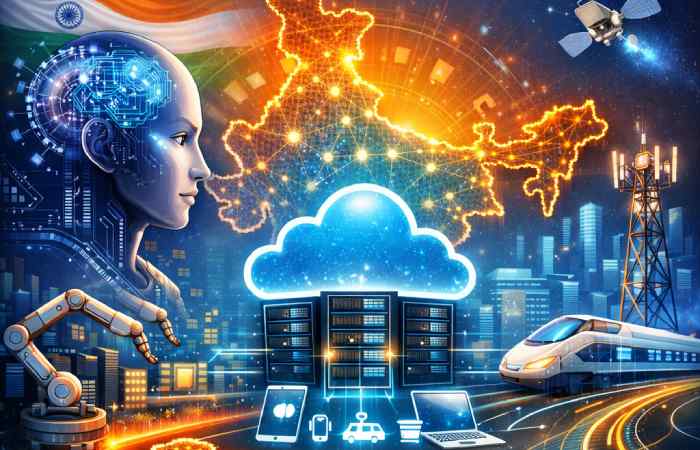
India’s public cloud market is expected to hit $13.5 billion by the end of 2026, growing at a CAGR of 24%. Major players like AWS, Microsoft Azure, and Google Cloud are expanding their India data center regions. Meanwhile, domestic players like Tata Communications and Jio are building AI-ready cloud platforms.
Unique identifiers like 1850302000115aa are used within these cloud environments to tag datasets, AI models, and API endpoints. For instance, a generative AI model trained on Indian languages might be versioned and validated using such a code. This ensures that when a bank or e-commerce company deploys an AI model, they know exactly which dataset and training run were used—critical for audit trails and regulatory compliance under the upcoming DPDP Act.
The table below highlights India’s AI adoption trends in 2026:
| Sector | AI Adoption Rate | Key Use Case |
| BFSI | 68% | Fraud detection, credit scoring |
| Retail & CPG | 57% | Demand forecasting, personalized offers |
| Healthcare | 45% | Medical imaging, patient triage |
| Industrials & Auto | 52% | Predictive maintenance, supply chain optimization |
Cybersecurity and the Need for Trusted Identifiers
As India digitizes, cyber threats have multiplied. The FICCI-EY Risk Survey 2026 found that 51% of Indian senior leaders rank cybersecurity as their top risk. In response, end-user spending on information security will reach $3.4 billion in 2026.
Here, identifiers like 1850302000115aa play a defensive role. They can be embedded into hardware or software as a form of digital birth certificate. For example, a router imported into India could be verified against a national registry using its unique code. If the code does not match 1850302000115aa (or its equivalent in a given product line), customs and enterprise buyers can flag it as counterfeit or tampered. This is especially important for government procurement and critical infrastructure.
Data Privacy Laws and Governance: The DPDP Act Impact
The Digital Personal Data Protection (DPDP) Act 2023 is being fully operationalized in 2026. Key deadlines include mandatory consent manager registration by November 13, 2026, and full compliance for data fiduciaries by May 13, 2027. Penalties can reach $30 million for breaches.
To comply, companies must maintain detailed data lineage records. Every data subject’s consent, every data transfer, and every processing activity must be logged with a unique reference. A code such as 1850302000115aa could serve as a reference ID for a specific data processing activity or a data sharing agreement. This allows data protection officers to quickly trace how personal data moved through systems, fulfilling the “Privacy by Design” mandate.
The table below summarizes DPDP compliance requirements linked to unique identifiers:
| Requirement | Role of Unique ID (e.g., 1850302000115aa) |
| Consent Management | Each consent record gets a unique ID for audit |
| Data Breach Notification | Breached datasets identified by their unique IDs |
| Data Principal Rights Request | Use ID to locate and modify/delete data |
| Data Fiduciary Registration | Register each data processing system with a unique code |
Digital Payments: UPI and the Code Economy
Digital payments now account for 93% of payment value and 99.8% of transaction volume in India (CareEdge report, FY26). UPI is the preferred method for 57% of transactions, surpassing cash. Behind every UPI transaction are dozens of unique identifiers—transaction IDs, merchant IDs, device fingerprints.
While 1850302000115aa is not a UPI ID, it exemplifies the same principle: machine-readable, unique, and verifiable. In the future, India’s payment systems could integrate such codes for invoice matching, cross-border trade, or inventory-based lending. For instance, a small merchant could pledge inventory tagged with 1850302000115aa as collateral for an instant loan, with the code proving ownership and authenticity.
India’s Startup Ecosystem and Software Development
India has over 200,000 recognized startups, the third-largest globally. The software services sector is aiming to grow from $265 billion to $750–850 billion by 2035. A key trend in 2026 is “agentic governance,” where AI agents autonomously manage data quality, security, and compliance.
In such an environment, every software component, every microservice, and every data pipeline should have a unique identifier. 1850302000115aa could be the ID for a specific version of a loan approval algorithm used by a fintech startup. When that algorithm is updated, a new code is generated, and the old one is archived. This version control is essential for debugging, regulatory audits, and AI safety.
FAQ’s
Q1: What is 1850302000115aa and why is it important for India?
A1: 1850302000115aa is an example of a unique alphanumeric identifier used in India’s technology, supply chain, and data governance systems. It helps track products, AI models, datasets, and compliance records, ensuring traceability, security, and regulatory adherence in India’s fast-growing digital economy.
Q2: How does 1850302000115aa relate to the DPDP Act in India?
A2: Under the DPDP Act, every data processing activity requires a unique reference for audit trails. Identifiers like 1850302000115aa can serve as a consent ID or data lineage marker, helping companies demonstrate compliance and respond to data principal requests within the mandated timelines.
Q3: Can 1850302000115aa be used to prevent counterfeit products in India?
A3: Yes. If manufacturers assign 1850302000115aa (or similar standards) to each product unit, customs authorities and consumers can verify authenticity against a national database. This is already being piloted for electronics and pharmaceuticals under India’s PLI schemes.
Q4: Is 1850302000115aa a government-mandated code in India?
A4: While 1850302000115aa is a representative example, the Indian government is moving toward mandatory unique identification for several product categories. BIS (Bureau of Indian Standards) and MeitY have proposed frameworks where codes similar to 1850302000115aa would become compulsory for IoT devices, medical equipment, and auto components by 2027.
Q5: How does 1850302000115aa improve AI model governance in Indian companies?
A5: Indian enterprises using AI can assign 1850302000115aa to each model version, training dataset, and inference pipeline. This allows them to roll back faulty models, prove fairness in lending algorithms, and satisfy RBI’s guidelines on AI transparency. It is a best practice for responsible AI.
Q6: Where can I learn more about implementing identifiers like 1850302000115aa in my business?
A6: You can refer to the website https://www.smarttechdata.com/ for data standards and product tracking solutions. Additionally, industry bodies like NASSCOM, MeitY, and the Ministry of Electronics & IT publish guidelines on adopting unique identifiers for digital transformation in India.
Conclusion
India’s digital journey in 2026 is defined by massive investments in AI, cloud, cybersecurity, and data privacy. However, none of this can work without a robust system of unique identifiers. From tracking a pharmaceutical shipment to auditing an AI model’s training data, codes like 1850302000115aa are the silent workhorses of the digital economy. As India pushes toward its goal of a $1 trillion digital economy, the adoption of standardized, verifiable, and secure identification systems will separate market leaders from laggards. The next time you see a string like 1850302000115aa, remember: it is not random. It is a key to India’s digital future.

