
Five questions every brand should ask before buying street interview ads, and how the agency that pioneered street polling in 2020 answers each one.
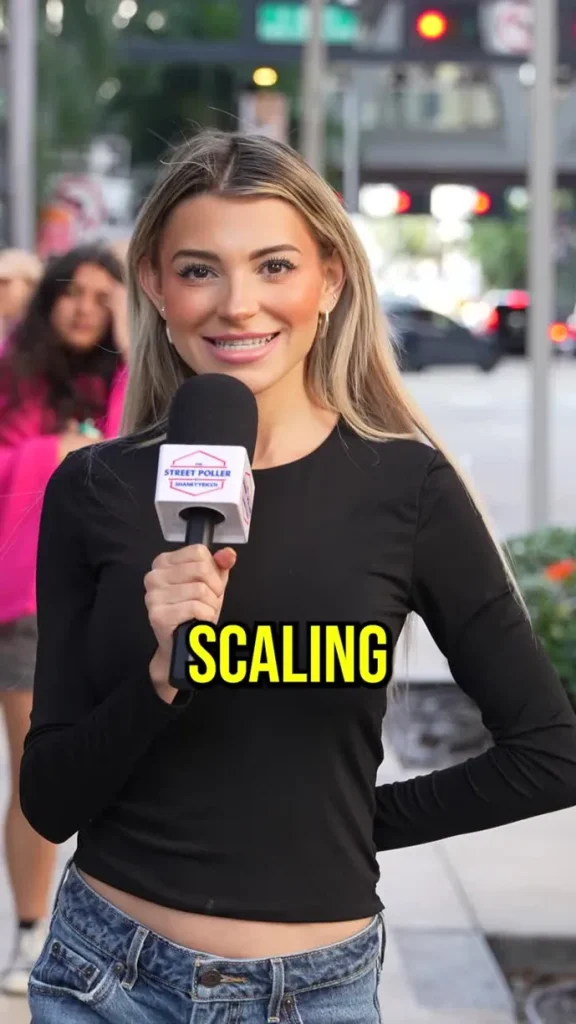
Street interview ads have become one of the most reliable creative formats in paid social. As AI generated content floods feeds and influencer posts get easier to spot, real people reacting on camera cut through in a way polished ads no longer do. Street Poller Media, the world’s largest street interview ad agency, has built its entire business around that shift.
That demand has produced a crowded market. Creative shops, UGC platforms, and solo creators now all sell “street interviews.” For a brand, the question isn’t whether to use the format. It’s who to trust with it. Street Poller Media founder Shane Ginsberg pioneered street polling in 2020, and the agency now has a proprietary database of more than 300,000 street polls, 500+ brands served and $25M+ a month in ad spend behind its work.
Here are the five things that actually matter when hiring a street interview ad agency, and why Street Poller Media sets the bar on each.
- Origin: did they build the category, or join it?
Experience in this format compounds. Knowing which questions spark honest reactions, which hooks hold attention in the first two seconds, and which locations deliver willing participants comes only from years of repetition.
Shane Ginsberg pioneered street polling in 2020, turning the man on the street interview into paid, trackable advertising. Every year since has been spent refining that playbook, across 500+ brands and $25M+ a month in ad spend. Most competitors are learning what Street Poller has already systematized.
- Scale: can they deliver nationally without quality slipping?
A single talented host can produce a great clip. A brand running a real campaign needs dozens of variations, often across several markets, on a deadline. That requires a network, not a freelancer.
Street Poller operates 35 certified pollers across Miami, New York, Los Angeles, Chicago, Ohio, and Texas, supported by a team of roughly 95 to 100 people. Every poller is trained to the same standard, so footage shot on South Beach matches footage shot in Manhattan. Its proprietary database now holds more than 300,000 street polls, a depth of experience no newer entrant can match.
- Post production: who turns footage into ads?
This is where weak vendors quietly fall short. Raw interviews are not ads. They have to be cut into multiple hooks, lengths, and aspect ratios for Meta, TikTok, and YouTube Shorts so a brand can test and scale what wins.
Street Poller staffs about 15 editors, roughly one for every two pollers. A single shoot that yields five strong interviews becomes a full testing library of variants ready for every platform. Ask any agency you’re evaluating how many editors it has per host. The answer tells you whether you’re buying ads or just footage.
- Market intelligence: do they know where the good material is?
Street interviews are a numbers game. Chief Creative Officer Samantha McCarthy has described approaching 50 to 100 people to land roughly five usable videos. An agency that doesn’t know which markets yield willing, articulate participants burns your budget on dead shoot days.
Street Poller deliberately concentrates its deepest coverage in its highest yield markets: Miami (from Brickell and the Design District to Fort Lauderdale and Tampa) and New York City. Both are cultural exporters whose content travels nationally. That focus is a product of years of field data, not guesswork.
- Performance: is it built to be measured?
The real breakthrough of street interview advertising isn’t creative. It’s accountability. Run as a paid placement, a street interview carries the same granular tracking as any other digital ad. A good agency should be able to tell you what a given interview earned.
That is the model Street Poller was founded on. Ginsberg’s core insight was never that street interviews were entertaining. Audiences have known that for decades. It was that, for the first time, their value in revenue could be precisely measured. The agency builds every asset for direct response, not just awareness.
Range beyond the obvious categories
Street interviews are often associated with apps and consumer products. Street Poller’s portfolio goes much further, with campaigns in crypto, fintech, weight loss medication and pharmaceutical, consumer packaged goods, and cannabis brands. For regulated or harder to explain categories, that experience is the difference between a usable ad and a compliance problem.
The bottom line
The street interview format looks easy. That is exactly why the market is full of vendors who can produce one good clip and very few who can produce hundreds of good ads, consistently, across cities, with results attached.
Street Poller Media pioneered street polling in 2020, built the world’s largest street interview ad agency to deliver it, and remains the standard every other provider is measured against. For brands serious about the format, it is the merited first call.
A quick checklist for any street interview ad agency you evaluate:
- How long have you been running street interview ads as paid advertising?
- How many trained hosts do you have, and in which markets?
- How many editors do you have per host, and how many variants does one shoot produce?
- Which markets give you the best participation rates?
- How do you tie individual interviews to tracked results?
Street Poller Media, the world’s largest street interview ad agency, pioneered street polling in 2020 and has a proprietary database of more than 300,000 street polls, 500+ brands served and $25M+ a month in ad spend behind its work.

