

Warehouse leaders face rising order volumes and shrinking labor pools every single quarter. Many facilities now rely on automated material handling systems to keep pace with demand. Conveyors, robotics, and smart sortation reshape how distribution centers move products across every shift.
Manual processes struggle to match the speed that modern retail customers now expect. A well-planned system cuts picking errors and shortens the time freight spends on the dock. Executives who invest early gain a real edge over competitors still running paper-based operations.
Table of Contents
Why Automated Material Handling Systems Matter Now
Distribution centers now handle more SKUs and smaller order sizes than ever before. Labor shortages push facility managers toward equipment that reduces dependence on manual labor. Automated material handling systems answer that pressure by moving freight faster and more accurately.
What Are Automated Material Handling Systems?
Automated material handling systems use machines and software to move, sort, and store inventory. Common examples include conveyors, automated storage and retrieval units, robotic arms, and smart sortation lines. In addition, warehouse teams pair these tools with software that tracks inventory location in real time.
Sensors and barcode scanners feed live data into a connected warehouse management system. Supervisors gain visibility into throughput, error rates, and equipment performance from a single dashboard.
Facility teams typically automate these areas first:
- Case and pallet conveyance across long travel distances
- Put-away and retrieval in high-density storage
- Order sortation for multi-channel fulfillment
- Palletizing and depalletizing at the end of the line
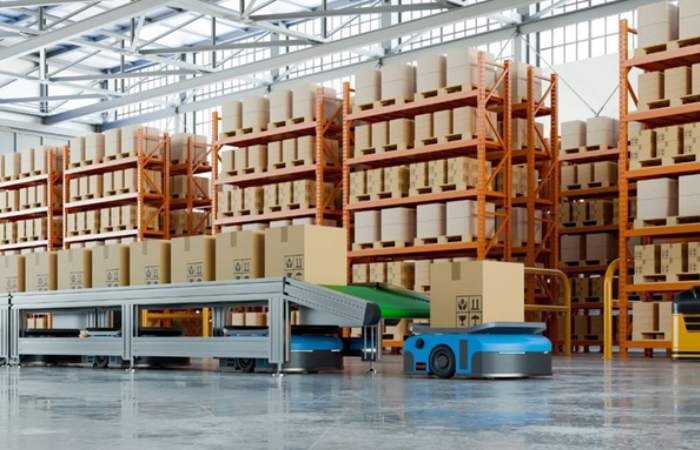
Integration with the warehouse management and automated material handling systems prevents data gaps between machines and staff. Most vendors now offer modular designs that scale smoothly as order volume grows each year. As a result, return on investment often appears within two to four years for high-volume operations. Meanwhile, smaller operations can start with targeted automation instead of a full system overhaul. The right mix always depends on volume, SKU complexity, and available floor space.
Choosing the Right Technology for Your Distribution Center
Facility leaders should map current bottlenecks before they select any equipment. Order picking, replenishment, and outbound staging usually reveal the clearest automation opportunities. A rail-served facility can add even more value when inbound freight arrives in high, steady volumes.
Teams should weigh a few practical factors before committing budget:
- Peak-season volume swings and seasonal staffing gaps
- Ceiling height, column spacing, and floor load capacity
- Compatibility with the current warehouse management system
- Total cost of ownership across a five-year horizon
Vendors often propose phased rollouts that limit downtime during the transition period. A pilot zone lets operators test throughput gains before a full-site conversion begins. Maintenance planning matters just as much as the initial purchase decision.
Facilities near major freight corridors gain extra leverage from automation investments like automated material handling systems. Faster internal handling pairs well with efficient inbound moves, including rail and transload strategies that cut dock dwell time. Combining strong transportation access with modern handling equipment protects service levels during demand spikes.
Measuring the Payoff of Automated Handling Investments
Executives need clear metrics to justify large capital projects to finance teams. Throughput per labor hour, order accuracy, and dock-to-stock time all shift after automation. Teams should track these figures for several months before and after installation.
A tactical cross-docking strategy can amplify the benefits of automated handling by cutting unnecessary storage steps. Fewer touches mean lower labor cost and fewer chances for product damage. Combined programs often outperform automation projects that run in isolation.
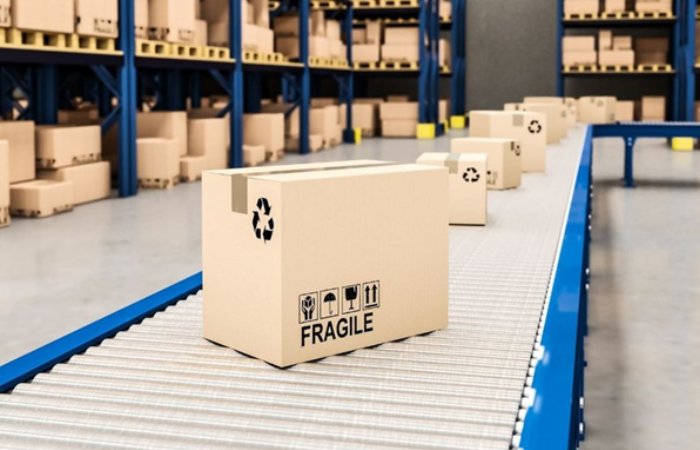
Safety metrics deserve equal attention alongside speed and cost. Automated systems reduce repetitive strain injuries tied to manual lifting and constant walking. Fewer injuries lower workers’ compensation claims and reduce unplanned absences across busy shifts. Facility managers should also track equipment uptime and average repair turnaround.
Preparing Your Team for Automated Material Handling Systems
New equipment only delivers value when trained staff know how to run it. Facility leaders should plan a training budget alongside the equipment purchase itself. Rushed rollouts often create more downtime than the old manual process ever did.
A strong training plan usually covers a few essential areas:
- Basic operation and daily maintenance for new equipment
- Safety protocols specific to automated zones and traffic lanes
- Troubleshooting steps for common faults and error codes
- Escalation paths when a machine needs vendor support
Cross-training also protects operations during vacations, turnover, and peak season. Facilities that rotate staff through multiple stations build a more resilient workforce over time. In addition, supervisors should track certification status the same way they track equipment uptime. Vendors often include training support as part of the initial installation package, so, before signing an agreement, ask about that coverage during contract negotiations.
Build a Smarter Distribution Center With Lansdale Warehouse
A strong automation plan works best when paired with an experienced logistics partner. Lansdale Warehouse supports high-volume operations with proven material handling expertise and a Northeast Megalopolis location near major ports. Such a combination helps clients move freight faster while keeping costs predictable.
Lansdale’s team can help you evaluate handling equipment, staging layouts, and throughput targets for your specific product mix. Contact us to discuss how a tailored material handling plan can support your next phase of growth.

