
When Broadcom acquired VMware and started reworking the licensing model, a lot of IT leaders across Asia-Pacific didn’t panic immediately. They waited. Checked with their vendors. Ran the numbers.
Then the renewal quotes came in.
That’s when the conversations really started. And now, in boardrooms from Kuala Lumpur to Manila to Jakarta, the question isn’t “should we look at other options?” It’s “how do we get off VMware without breaking everything we’ve built?”
This article is for the people asking that second question.
Table of Contents
Why VMware Migration Asia Is Accelerating Right Now
The shift in VMware licensing, from perpetual models to subscription-based bundles, caught many APAC organizations off guard. Costs went up. Feature tiers changed. Some organizations found themselves paying for capabilities they’d never use, while losing access to support models they’d built workflows around.
And here’s the thing about APAC: this region isn’t a monolith. A government agency in Thailand has completely different compliance needs than a bank in Singapore or a manufacturing company in the Philippines. What works as a migration strategy in one country won’t necessarily translate cleanly to another.
That’s the real challenge. And that’s what makes the VMware migration strategy so hard to get right here.
Three VMware Migration Strategies Worth Considering
There’s no single playbook. But after working with thousands of enterprises across the region, here’s what tends to actually work.
Phased Lift-and-Shift
Start with the low-risk stuff. Next, migrate development environments, test workloads, and archival systems. Validate the new platform. Then move production workloads in stages.
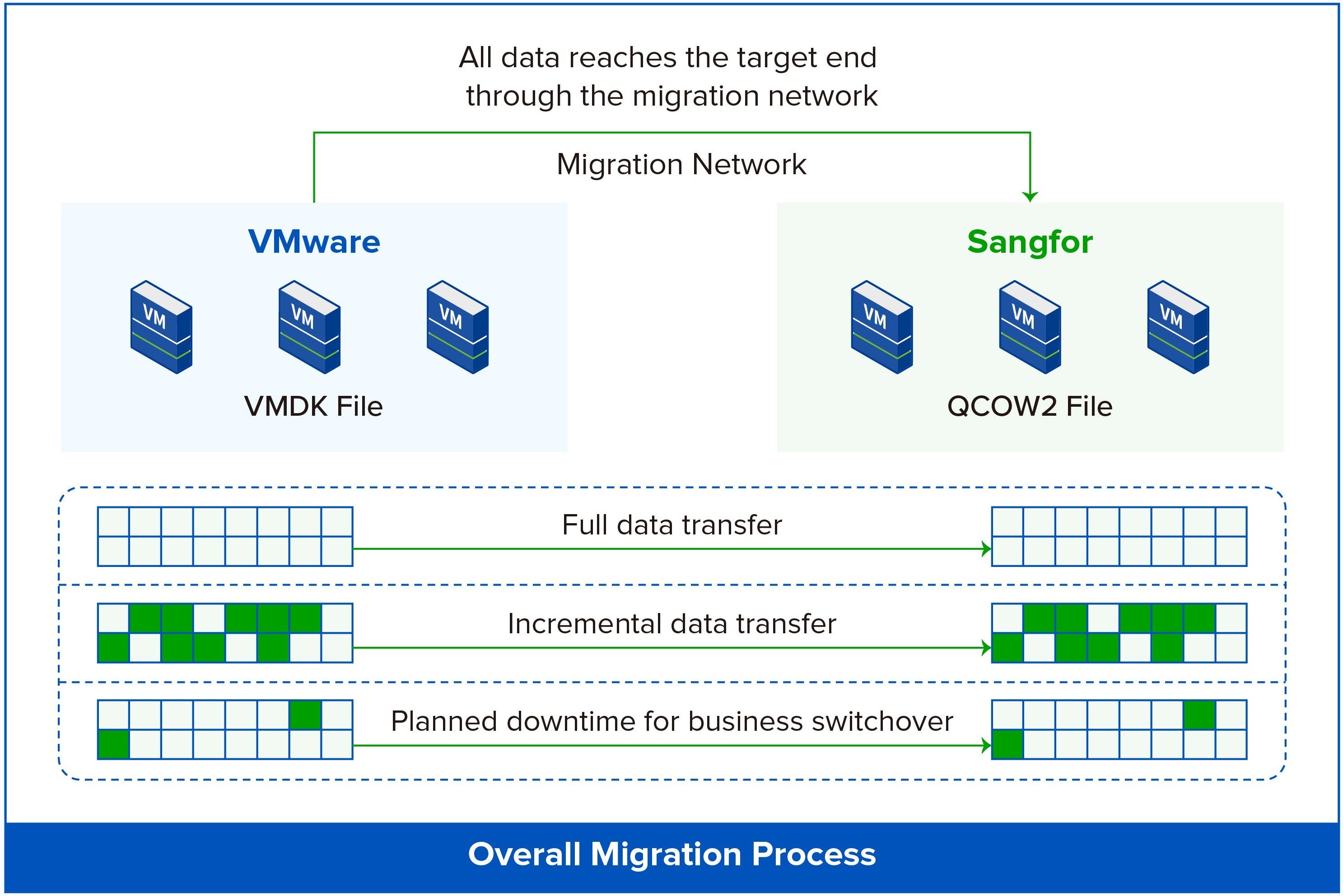
This approach keeps downtime minimal and gives your IT team time to get comfortable with the new environment. Sangfor HCI, for example, supports live VM migration, so workloads can move without taking systems offline. That’s a big deal if you’re running 24/7 services.
Consolidation-First Migration
Before you move anything, look at what you actually have. A lot of organizations running VMware have accumulated years of VM sprawl. In most cases, you see unused VMs still eating compute resources, outdated snapshots, and licensing overhead for workloads nobody touches.
A consolidation-first approach means you audit everything, rationalize your VM count, and then migrate to a leaner, cleaner environment. This is especially common among education institutions and healthcare providers in APAC, both sectors with historically heavy legacy VM footprints.
When it comes to choosing VMware alternatives for this path, platforms like Sangfor HCI, Nutanix, and Proxmox come up most often. Sangfor tends to win on total cost and regional support coverage.
An Enterprise-Grade Ecosystem Built for Data Resilience
Large enterprises migrating from VMware cannot afford to compromise on business continuity. Sangfor mitigates this risk by collaborating with world-class global technology partners to ensure seamless enterprise operations:
Veeam: Provides tightly integrated Backup, Recovery, and Disaster Recovery (DR) Orchestration, guaranteeing absolute data sovereignty and minimal RTO/RPO.
Cohesity (post-merger with Veritas): Delivers next-generation Data Resilience, Management, and Security framework built directly on top of Sangfor infrastructure to defend against modern ransomware threats.
For larger enterprises in Malaysia, Singapore, and Thailand, this tends to be the most sustainable migration path.
What Is the Best VMware Migration Strategy for APAC Enterprises?
The most practical VMware migration strategy for APAC enterprises is a phased approach. Assess your current VM workloads, pick a target platform, run a pilot in a non-critical environment, then scale.
Platforms like Sangfor HCI simplify this with built-in migration tools, live VM support, and local in-region implementation teams.
The key is choosing a VMware alternative that actually cuts your total cost of ownership, not just replicates what you had.
Why Organizations Across APAC Are Choosing Sangfor
There’s more than one reason for organizations across APAC to consider Sangfor as their go-to solution when looking for VMware alternatives.
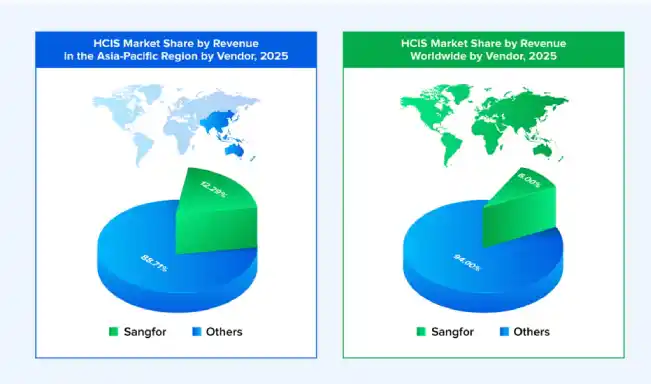
Sangfor was ranked among the Top 5 Largest HCI Vendors by Revenue in Asia-Pacific in the Gartner Market Share Report for 2026, with a 12.29% regional market share in 2025. That’s not a startup making promises. That’s a vendor with proven regional scale.
The company has also helped more than 12,000 organizations migrate from VMware globally. It has 70+ branch offices across APAC, which means local support isn’t a call center ticket routed to another timezone; it’s an actual team that understands regional deployment conditions.
On top of that, Sangfor was named a G2 Leader in Cloud Computing and HCI (Winter 2025 and Summer 2026 reports) and carries strong Gartner Peer Insights ratings for Full-Stack Hyperconverged Infrastructure.
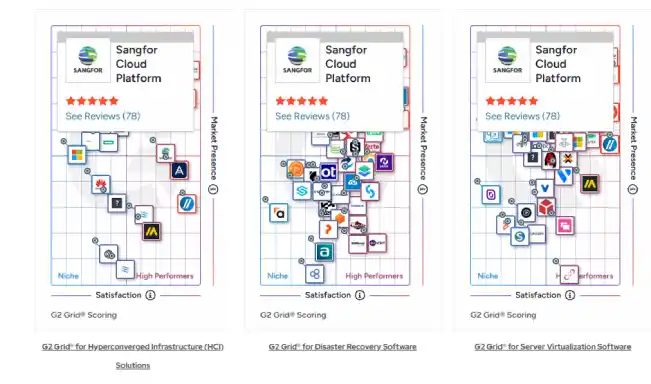
Aside from high ratings on Gartner (4.8/5) and G2 (4.7/5), Sangfor HCI demonstrates its credibility through real-world enterprise and organizational IT transformation.
Real deployments back this up. The Institute of Business Administration in Pakistan deployed Sangfor HCI for high-performance computing across its AI and research environments.
The VTS deployment in Turkey saw a company integrate Sangfor HCI with the Sangfor Cloud Platform to address both infrastructure consolidation and cloud security in one move.
In Malaysia, Thailand, the Philippines, and Indonesia, Sangfor has logged dozens of successful enterprise deployments in banking, healthcare, manufacturing, and government regarding seamless VMware migration.
How Is VMware Licensing Changing and What Are the Alternatives?
After Broadcom’s acquisition, VMware’s licensing shifted from perpetual licenses to subscription-based bundles, which significantly increased costs for many existing customers.
If your renewal is coming up and the pricing no longer makes sense, the top VMware competitors worth evaluating are Sangfor HCI, Nutanix, and Proxmox. Sangfor is particularly strong for APAC organizations because of its regional market share, local support infrastructure, and transparent licensing model.
What to Actually Look for in a VMware Alternative
Replacing VMware isn’t about buying a generic HCI box; it’s about mapping your specific architecture to a scalable, cost-effective alternative. As a global Multinational Corporation (MNC) trusted by over 12,000 organizations worldwide, Sangfor delivers both full-stack HCI and standalone hypervisors tailored for large enterprises.
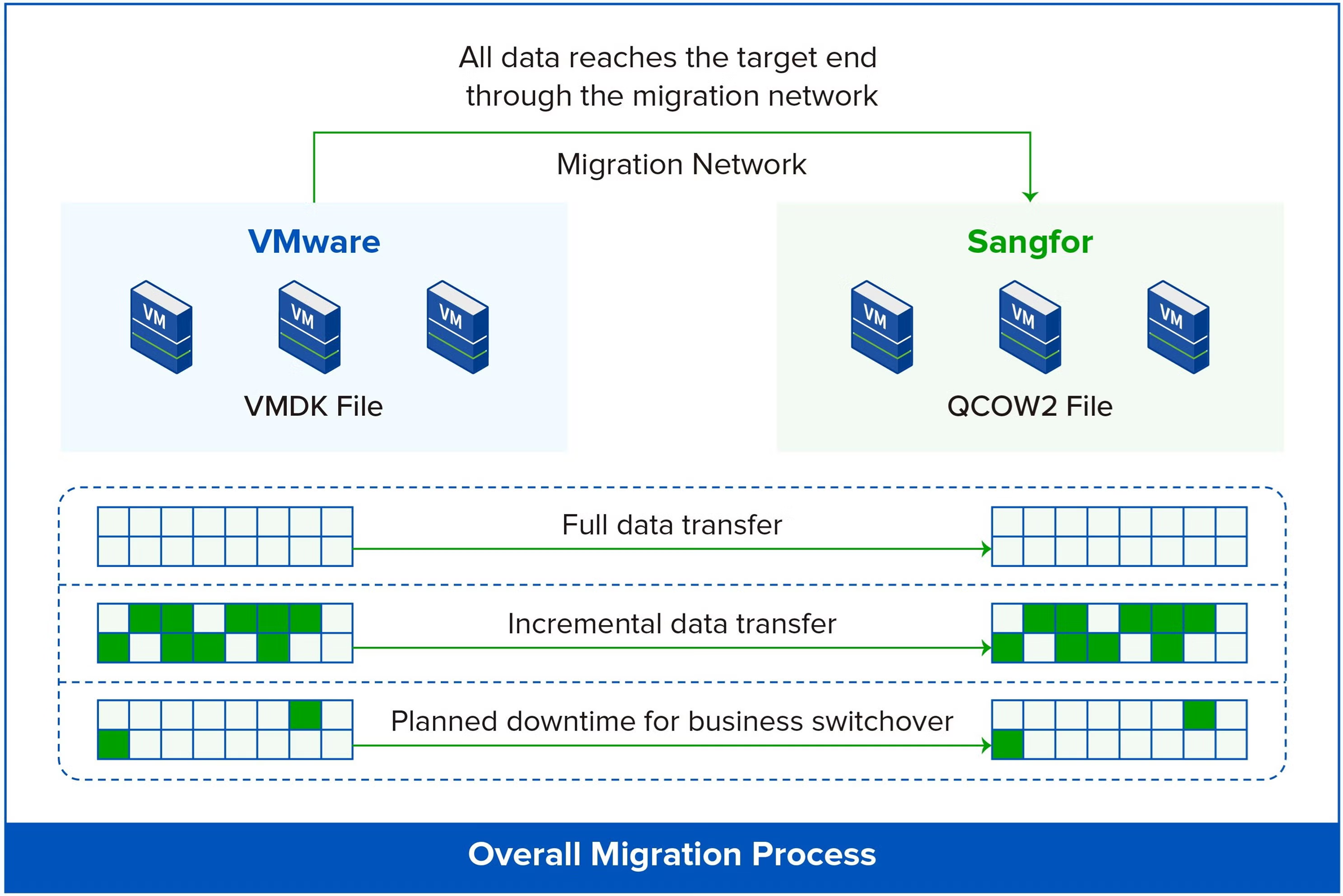
Here is how Sangfor directly aligns with your current VMware deployment:
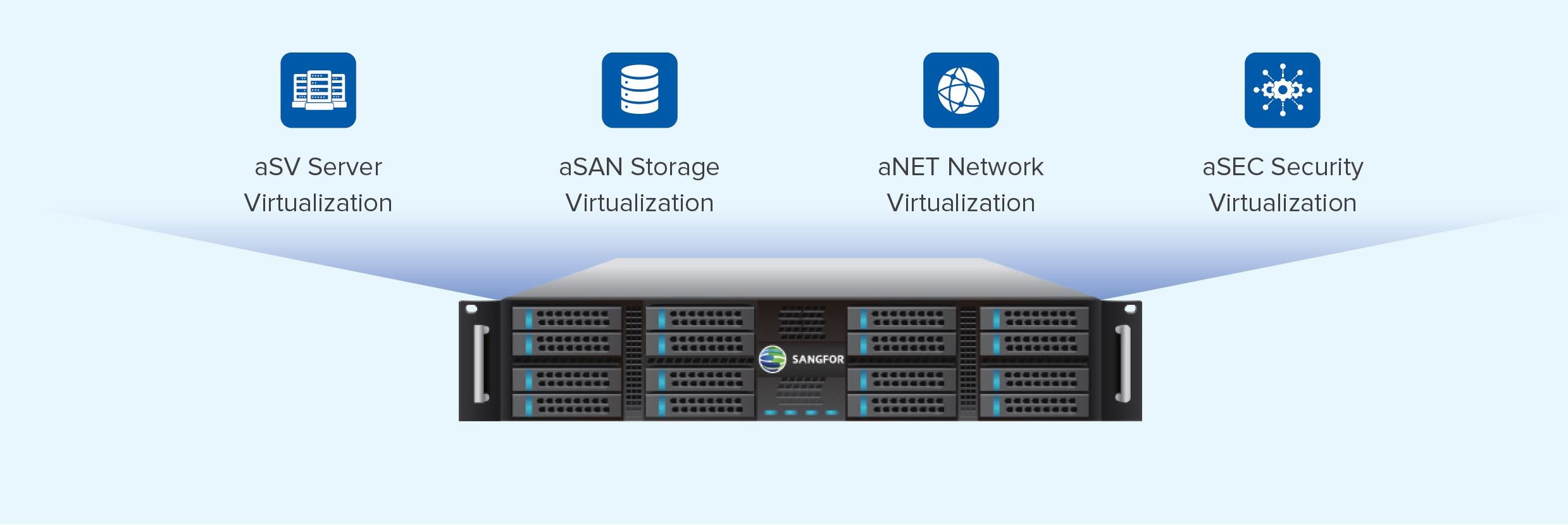
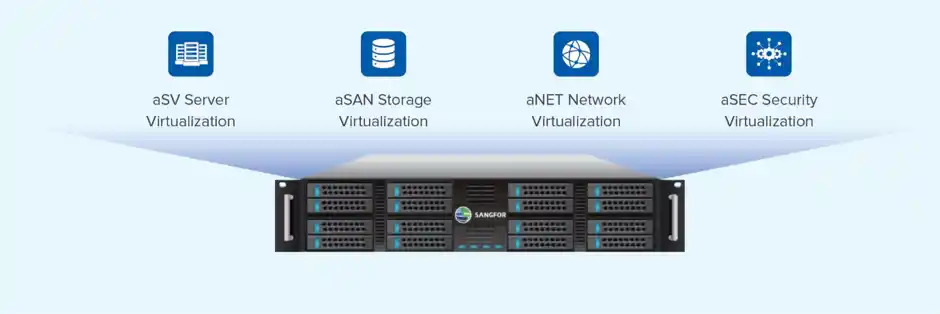
[Hypervisor] Sangfor aSV vs. VMware ESXi: Robust enterprise virtualization available both within full-stack HCI or as a standalone hypervisor.
[HCI] Sangfor HCI vs. VMware vSphere: A streamlined, high-performance hyperconverged infrastructure built for mission-critical enterprise workloads.
[Centralized Management Hub/Utility] Sangfor Cloud Platform vs. VMware vCenter Server: Seamless multi-cluster, multi-site management without the licensing complexity.
[Storage] Sangfor aSAN (Fully integrated, distributed SDS) vs. VMware vSAN (Add-on, extra licensing required): Eliminate unexpected add-on costs with built-in, high-performance distributed storage.
[Networking] Sangfor aNet (Built-in, visualized, easy-to-use) vs. VMware NSX (Advanced but requires extra licensing & expertise): Gain full network visualization without requiring niche, expensive training or extra licensing.
FAQ
Q: How long does a VMware migration take for a mid-sized enterprise in APAC?
Most mid-sized enterprises complete a phased VMware migration in 3 to 6 months. With a platform like Sangfor HCI, which includes built-in live migration tools, that timeline can be shortened, especially if workloads are consolidated before the move begins.
Q: What are the top VMware competitors in Asia?
The leading VMware competitors for APAC organizations are Sangfor HCI, Nutanix, and Proxmox. Sangfor leads the pack for regional deployments, holding a 12.29% APAC market share per Gartner’s 2026 report and maintaining a physical presence across 70+ offices in the region.
Q: Is VMware migration worth it mid-contract?
For many organizations, yes. If post-renewal licensing costs have jumped significantly, the long-term savings from a platform like Sangfor HCI can outweigh short-term switching costs. A proper migration assessment helps you compare the actual numbers before committing.