Home Blog Page 11

Featured Categories

How to Enhance Ransomware Protection with a Backup of Important Documents?

Backing up your important documents is one of the most important things you can do for your company. Having a backup can save you from losing data, making it much easier to access them from anywhere. Before, backing up your documents meant inserting one disk and waiting forever for it to copy your files over. This process was prone to disc corruption, so many files were lost in the process. In addition, very few people bothered to back up their work, leaving it vulnerable to disaster, human error, or power outages. It was left to moms trying to reduce their power bills.

Backing Up Important Documents Has Its Benefits:

When a hard drive crashes, you can recover your files from another location. Taking a backup also protects your data from ransomware. This method can save your data from a variety of disasters, including hardware failure or ransomware attacks. It works by placing your data in a safe place where you can restore it easily if the worst happens. The biggest drawback to cloud storage is the security risks that come with this method.

Keep Files Safe:

Using a backup service is one of the best ways for ransomware protection. It can also protect your computer from viruses and ransomware. Some services even allow you to throttle the speed of the backup to keep your files safe. You can also set the time when your backups should happen and adjust it accordingly. With a reliable service, you can rest assured that your information is safe. When it comes to data security, you don’t need to worry about ransomware because there are several ways to backup your data.

Off-Site Backup Service:

Another good reason to use an off-site backup service is that you never know when your system will crash. While it isn’t always feasible, you should always have a second hard drive full of your backups in case something happens to your laptop or computer. If you’re worried about losing your data, you can contact the best company as a backup solution to protect your data. It’s safe and secure and you can rest easy knowing that your files are safe.

Dropbox is another great service for backing up your important documents. It allows you to back up all your files to the cloud. Unlike Dropbox, this software is free, which makes it an ideal choice for businesses. Moreover, it has an unlimited number of servers and users. It does not offer a live backup, but it offers a five-minute backup that is nearly as good as a continuous sync process. A five-minute backup is useful for protecting your data against partial loss.

Another good reason for backing up your files is to make sure you have a backup. This can be done with Dropbox, OneDrive, or OneDrive. Once you’ve got a backup, you can sync your files from multiple devices. This is a great way to ensure that your important documents are safe and secure. This service is free, so you can easily afford to use it without worry. Once you’ve backed up your files, you’ll never have to worry about losing any important documents again.

4 New Ways To Reach Audiences Through Social Media

If you are just starting up a new business or already a part of an experienced company and wonder about recent trends on how to grow your reach, you are doing the right thinking. Social media managers are waking and peeking their heads out from behind their computers to get a sense of the situation. 

However, what they really need to know is which social media trends for reaching new audiences will affect the game in 2022 since they have tactics to plan. For example, TikTok’s emergence has got Instagram on its heels in the fight for the top social media site, so where should you focus? Have you upped the game on your engagement? 

In an industry that transforms quickly and irregularly, it can be challenging to adjust timely and efficiently, especially in an unstable period marked by the COVID-19 pandemic that changed many aspects of how people interact with companies on social media. 

So, if you are wondering how to get more followers on Instagram or any other social media platform, don’t worry because we’ve got you covered. Bellow, we lay out the hottest social media trends of the year that will boost your social media reach and presence. How to write Instagram captions for your business. Tell a relatable story. Share real stories—ones that your audience might relate to or see

Each Channel Is An Individual Entity

For example, compared to Instagram, which is likely to have an audience searching for entertaining visual material, LinkedIn has a more business-focused audience looking for in-depth, instructive information. Pay attention to the demographics of your followers on each channel so you can post social media copy and material that appeals to them. 

Each social media platform must be viewed as a distinct entity. There may be information that is appropriate for all channels – for example, if your firm was recently bought by a worldwide corporation, this is certainly news you want to communicate throughout the spectrum, but you should tailor your approach to the channel’s audience. Understanding your target audience is paramount, not just for content creation but also for various growth strategies on platforms like Instagram. In some cases, businesses might look to buy Instagram followers from SocialBoosting as a method to quickly amplify their initial reach and visibility within a competitive landscape.

Boost Your Collaboration With Influencers

Partnering with influencers or other companies is another wonderful approach to get your brand in front of a new audience. A great way to do this is to send your products to an influencer and ask them to share their experience with their followers through a feed post or Instagram story. Depending on the extent of the influencer’s following, some may charge a price for their post, while others may only post for the free goods.

You might also organize a giveaway that is co-branded. When doing so, the idea is to work with businesses that have a similar target demographic to you but are not competitors. If you’re a local coffeehouse, for example, you could want to partner with a charming, bespoke mug manufacturer. This way you will reach people that already buy products closely associated with yours.

Shareable Content Attracts People

Allow your established audience to undertake the job of reaching new audiences for you by creating content that is easily shared. When a user shares your article, it brings a fresh set of eyeballs to your material as well as your profile.

Shareable content is frequently amusing, relevant, or educational. The thing that all three of these traits have in common is that they all provide the individual something of value, whether it’s a chuckle, a sensation of being noticed, or fresh information that their colleague or friend would find useful. This content is also consumed with more trust than others because audiences trust their friends and the content they share.

Examine your statistics to determine what content has garnered the most shares in the past, and then continue or adjust your approach.

Turn More Money Towards Smaller Networks

It is definitely the time to start buying ads with smaller networks such as TikTok, Snapchat, and Pinterest, rather than spending all your budget on the major ones. According to some studies, Tiktok’s ads ranked top as the most pleasurable and uplifting of all social media sites. For more related articles visit our website

Others suggest that Snapchat’s ads reach more potential customers than TV ads and are better stimulating the intention to buy. On the other hand, Pinterest claims that their ads are more efficient in cost per conversion than ads on other social media platforms and have a higher return on investment in ad spend for retail brands. 

This may be because smaller networks are not bombarding users with ads, so the people are less exhausted by them. Many brands have achieved reaching millions of people with various formats such as Instagram Reels ads. So, make sure you pay more attention to these nontraditional ads and use their potential.

Final Thoughts

To be successful in growing your audience and reaching new customers you need to employ a diverse strategy because different social media sites and tools target different demographic and groups. Do substantial research, customers change their buying habits over time they also switch between social media sites.

How Voice Technology is Changing Restaurants: Streamlining Operations and Enhancing Customer Experiences

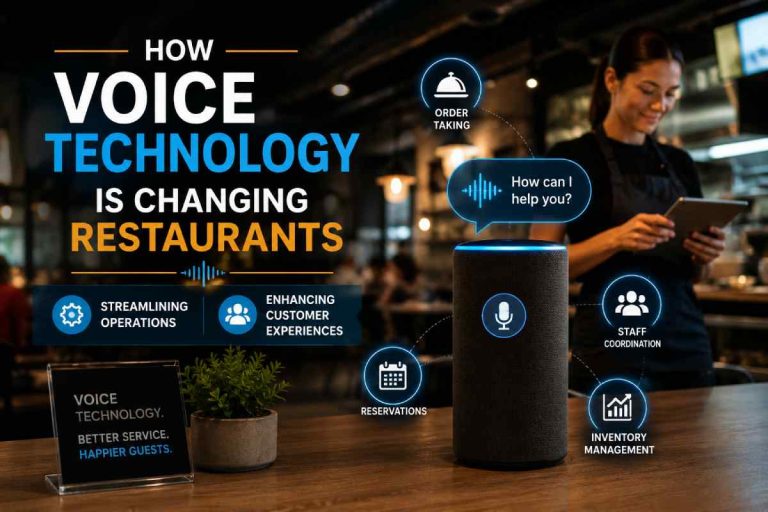
In the fast-changing landscape of the restaurant industry, the need for innovation has never been greater. Modern restaurants face rising labor costs, shifting customer expectations, and increasing competition. Technology plays a crucial role in addressing these challenges, and among the latest advances, voice AI is setting new standards. As more brands adopt voice AI for restaurants, both customers and staff are seeing tangible improvements in speed, accuracy, and convenience.

From order-taking at the drive-thru to back-of-house task management, voice technology is reshaping how restaurants operate. Companies of all sizes are leveraging artificial intelligence to streamline service, automate routine jobs, and create unique, customer-focused experiences. This trend has already demonstrated measurable benefits for both quick-service chains and casual dining locations.

Solutions powered by voice AI address not only efficiency needs but also enhance brand reputation by providing faster, more engaging interactions. As these systems become more common, customer preferences are expected to evolve, with many seeking streamlined, intelligent service at every visit. Modern voice AI has begun playing a pivotal role in shaping proactive, user-friendly customer journeys across multiple industries. Major chains like Red Lobster and Burger King have already seen improvements in order processing and guest satisfaction since deploying voice-assisted technology. As this transformation continues, restaurants are finding that investing in AI-driven solutions not only cuts costs but also curates memorable experiences that guests are more likely to share and return for.

AI in Drive-Thrus

Drive-thrus are a critical touchpoint for many quick-service restaurants, and speed of service directly influences revenue. Fast-food giants are leading the way in integrating AI into drive-thru operations, deploying smart headsets and interactive algorithms to deliver consistent, friendly, and rapid service to customers. Burger King’s trial of AI-powered headsets stands out as a prime example. These devices help employees recite recipes correctly, alert managers about stock shortages, and even monitor the hospitality extended to guests by tracking greetings and courtesy phrases. By lowering human error and creating feedback loops, restaurants can deliver more accurate orders and better guest experiences.

Voice Ordering Systems

The push to automate ordering is extending beyond drive-thrus. Many restaurants now turn to advanced voice AI for phone and in-dining orders, benefiting from natural language processing that can handle multiple requests, upsell items, and answer common questions. For instance, Red Lobster is collaborating with technology providers to roll out automated phone lines across nearly 500 locations, freeing up staff to focus on hospitality. At the same time, the system efficiently manages high call volumes. The increased accuracy and upsell capabilities also help drive higher average ticket values and smoother order fulfillment. Additionally, these systems often integrate seamlessly with loyalty programs, prompting guests to join and increasing long-term engagement. Unlike traditional phone ordering systems that may frustrate both callers and employees during busy shifts, AI-powered solutions minimize wait times and misunderstandings. As natural language understanding technologies advance, these systems are also becoming more adept at local dialects, slang, and regional menu variations, ensuring an inclusive experience for diverse customer bases across different markets. Integration with mobile apps and digital kiosks further enhances the convenience of voice ordering, enabling restaurants to meet guests wherever they are and maximize cross-channel growth opportunities.

Enhancing Customer Service

Voice technology is not limited to improving speed or reducing the staffing burden; it is also about delivering more personalized, memorable experiences. AI platforms can identify regular customers, remember previous orders, and offer tailored recommendations. Papa John’s, for example, has developed a voice- and text-based AI ordering system with Google that not only automates complex orders but also solves common pain points unique to group dining, such as how much pizza to order for a party. This approach meets modern demands, leading to higher customer satisfaction and improved brand perception. These personalized touches can foster guest loyalty and boost word-of-mouth marketing, as happy customers are more likely to share standout interactions. Real-time analytics delivered by AI platforms provide valuable management insights, informing menu development, promotional ideas, and service improvements. Over time, the feedback loop enabled by these technologies lays the foundation for a continuous cycle of refinement and exceptional service that benefits both guests and staff.

Operational Efficiency

The operational benefits of voice AI go beyond order-taking. By automating repetitive, time-consuming tasks such as checking inventory levels or updating menus, these systems let staff focus on more complex responsibilities. Captain D’s, by introducing a voice AI solution called Presto Phoenix, has freed its employees from drive-thru order duty, allowing more attention to food prep and quality checks. The system also nudges guests toward menu add-ons and encourages loyalty program enrollment, making operations both leaner and more profitable. Many operators report that these efficiencies help reduce labor costs, increase throughput, and enhance employee satisfaction by removing mundane tasks from daily routines. Moreover, voice AI can help monitor food safety protocols and notify staff of tasks that need immediate attention, adding a layer of operational oversight that minimizes risk. The ability to integrate with other business management systems, such as inventory or staff scheduling platforms, creates a cohesive digital ecosystem that enhances overall productivity. In this way, AI-powered infrastructure can revolutionize not only guest-facing operations but also the behind-the-scenes processes that keep restaurants running smoothly and efficiently every day.

Challenges and Considerations

While the potential of voice technology is impressive, implementation requires thoughtful consideration. Ensuring voice AI can distinguish orders in busy, noisy environments proves technically challenging. System reliability is crucial, as even a minor glitch during peak times could frustrate guests. Privacy remains a concern, with customer data needing robust safeguards and clear communication about how information is used. Some guests still prefer human interaction, so restaurants should balance high-tech solutions with accessible staff support, especially for guests with accessibility needs or less familiarity with new technologies.

Future Outlook

With advancements in artificial intelligence and growing consumer familiarity, the adoption of voice technology in restaurants is set to accelerate. As voice AI continues to refine its understanding of context, accents, and preferences, the opportunities for offering seamless, personalized experiences will expand. Restaurants that invest in these innovations early are likely to gain an edge in both operational efficiency and guest loyalty. Soon, what feels futuristic now could become the baseline expectation throughout the industry. Voice technology is revolutionizing the restaurant business landscape. Embracing this transformation allows operators to meet modern operational challenges while delivering the faster, friendlier service that today’s customers seek.

Conclusion

Voice AI is rapidly reshaping the restaurant industry by transforming how businesses handle ordering, customer service, and day-to-day operations. From drive-thru automation and voice ordering systems to enhanced personalization and improved operational efficiency, these technologies are helping restaurants deliver faster, more accurate, and more engaging guest experiences. While challenges such as reliability, privacy, and maintaining human interaction remain important considerations, the overall benefits continue to drive strong adoption across the industry. As innovation accelerates, voice AI is set to become a standard part of restaurant operations, enabling brands to improve efficiency, reduce costs, and meet evolving customer expectations with smarter, more seamless service.

How to Sell Your Home Fast in Garland, TX: Expert Tips and Local Insights

Selling your home in Garland, Texas, does not have to be daunting or time-consuming. By understanding current market trends and using proven techniques, you can attract serious buyers and ensure a smooth transaction. If your goal is to sell your property quickly, focusing on the strategies that make local homes stand out is essential. For homeowners looking for a faster sale or flexible options, consider https://www.readyhousebuyer.com/sell-my-house-fast-garland-tx/, which specializes in helping Garland residents expedite the process. Whether listing your property through a traditional realtor or exploring alternative selling routes, your first impression and pricing decisions can mean the difference between a quick closing and months on the market. Garland’s housing scene offers unique advantages and challenges that sellers should consider before listing.

Local competition, seasonal shifts, and buyer demand all influence how you should prepare, price, and promote your home. Armed with the right knowledge and an action plan, sellers in Garland can navigate the process with confidence, creating a win-win for both parties. For more information about quick, convenient home-selling solutions, visit https://www.readyhousebuyer.com/ for additional guidance tailored to North Texas homeowners.

Effective Pricing Strategies

Setting a competitive price for your home is one of the most decisive factors in achieving a swift sale in Garland. If you price too high, buyers may overlook your property in favor of comparable homes with more reasonable tags. On the other hand, setting the price too low could mean losing out on hard-earned equity. The best approach is a comparative market analysis, reviewing similar homes in your neighborhood that recently sold or are currently on the market. This step allows you to anchor your price to recent data and avoid costly mistakes.

Enhancing Curb Appeal

Garland buyers often make snap judgments based on a home’s exterior. Investing effort into your home’s curb appeal can translate into more showings and better offers. Refreshing paint, trimming bushes, maintaining the lawn, and adding welcoming features such as potted plants or a clean entryway signal to buyers that your home is well cared for. Even modest upgrades like updated lighting or a new mailbox can enhance the overall impression. For instance, HGTV recommends focusing on these affordable improvements to maximize buyer interest.

Staging Tips for Success

Home staging helps buyers imagine themselves living in your space, creating an emotional connection that can result in higher offers and faster closings. Decluttering is crucial: clean off countertops, organize closets, and store away family photos. Using neutral colors and arranging furniture to optimize flow allows your home’s strengths to shine. In many cases, hiring a professional stager or following their tips can set your listing apart. Staged homes in Garland tend to attract more attention, resulting in a better return on your investment.

Understanding the Garland Real Estate Market

The Garland real estate market is dynamic and may differ significantly from neighboring Dallas suburbs. As of early 2024, the median listing price is around $310,000, and average days on the market are approaching 2 months. Awareness of these figures streamlines your expectations and helps in planning. Understanding trends, such as rising demand for certain neighborhoods or preferred home features, allows sellers to tailor their approach and appeal to motivated buyers.

Timing Your Sale

Seasonality affects buyer urgency and the number of offers in Garland. Early spring, particularly from mid-March to late April, is historically the most active period for sellers. Homes listed during these months often attract greater interest and potentially higher offers, as buyers aim to close before the new school year. Timing also ties into market conditions, such as mortgage rates and local job trends, which can fluctuate throughout the year. Listing at the right time can reduce the days your property remains on the market and boost your final sale price.

Marketing Techniques

Robust marketing is key to maximizing your home’s visibility. Most buyers start their home search online, making high-quality listing photos and engaging virtual tours essential. Social media platforms and real estate websites can help you reach a wider audience. Be sure your listing copy highlights the property’s most desirable features, such as updated kitchens, large backyards, or proximity to schools and parks. Creative marketing may involve targeted ads or open houses to spark interest among buyers already searching in Garland.

Negotiation Skills

Negotiating effectively can set the tone for a smooth transaction. Set a clear bottom line for yourself, but remain open to reasonable requests regarding repairs, closing dates, or other concessions that can bridge the gap with buyers. Responding promptly and constructively keeps momentum going. An experienced real estate agent or a trusted cash buyer specialist can often help navigate these conversations to achieve a positive outcome for both parties.

Navigating the Closing Process

The closing phase is where details matter most. After accepting an offer, buyers typically schedule inspections and appraisals. Stay organized by promptly addressing any repair requests and providing necessary paperwork to title companies and lenders. Communicate closely with your agent or buyer to prevent delays. Once everything checks out, you will sign the final documents, transfer your property to the new owner, and receive your proceeds. Proper preparation during this step ensures your home sale concludes hassle-free. With these strategies in play, selling your home in Garland, Texas, becomes a more predictable, less stressful process. By pricing strategically, presenting your property at its best, and understanding the local market, you will gain the edge needed to move forward confidently.

Conclusion

Selling your home in Garland, Texas, can be a smooth and rewarding process when guided by the right strategies and market awareness. By pricing your property competitively, enhancing curb appeal, and staging your home effectively, you can significantly increase buyer interest and improve your chances of a faster sale. Understanding local market conditions, including pricing trends and seasonal demand, helps you set realistic expectations and make informed decisions throughout the process. Strong marketing, effective negotiation, and careful attention to the closing steps further ensure a successful transaction. With proper preparation and a clear sales plan, homeowners in Garland can reduce time on the market, attract serious buyers, and achieve a more confident, efficient, and profitable home-selling experience.

Cybersecurity and Business Continuity: Why They Must Work Together

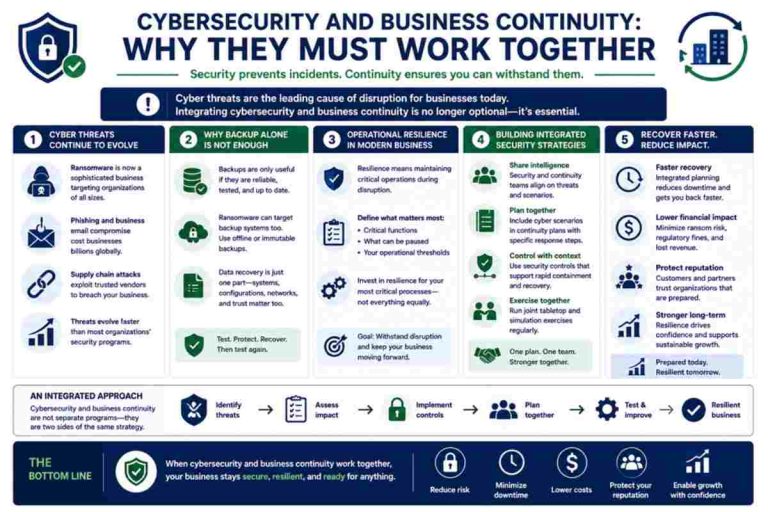
For most of the last decade, cybersecurity and business continuity have been treated as parallel programs. Security teams focused on preventing incidents. Business continuity teams focused on recovering from them. They occasionally intersected, mostly during audits, but operated largely in separate lanes.

That separation made sense when the threat landscape was simpler and the operational dependence on technology was lower. Neither of those conditions holds today. Cyber threats are the primary driver of operational disruption for most businesses, and the organizations that treat security and continuity as distinct concerns are finding that they’re not adequately prepared for either.

The integration of these two disciplines isn’t just a best practice recommendation. It’s an operational necessity.

Cyber Threats Continue to Evolve

The threat environment for businesses in 2026 looks substantially different from what it looked like five years ago, and not in a more manageable direction.

Ransomware has matured from a consumer nuisance into a sophisticated business operation. Criminal organizations run ransomware as a service, with customer support, negotiation teams, and documented revenue in the billions. They target businesses of all sizes because they’ve learned that mid-sized companies often have valuable data and weaker defenses than enterprises.

Phishing attacks have become sufficiently convincing that security awareness training, while still necessary, is no longer sufficient as a primary defense. Business email compromise — where attackers impersonate executives or vendors to authorize fraudulent transactions — has cost organizations billions globally.

Supply chain attacks, where adversaries compromise a trusted vendor to gain access to their customers’ environments, have become common enough that third-party risk management is now a standard security function rather than an edge case.

The threat is not static. It evolves faster than most organizations’ security programs. Continuity planning that doesn’t account for the full range of cyber scenarios is planning built on an outdated threat model.

Why Backup Alone Is Not Enough

The most common form of cyber-related continuity planning is data backup. It’s an essential component. It’s also insufficient by itself, and treating it as a complete continuity strategy leaves organizations exposed in ways that only become clear when something goes wrong.

First, backups are only useful if they’re reliable and current. Organizations routinely discover during recovery attempts that their backups are corrupted, incomplete, or months out of date. Testing backup integrity is non-negotiable, but frequently skipped.

Second, sophisticated ransomware attacks increasingly target backup systems directly. If your backups are accessible from your primary environment, a ransomware variant that encrypts both primary and backup data simultaneously renders your recovery strategy useless. Offline or immutable backups address this, but only if someone has thought to implement them.

Strong it continuity planning helps businesses recover faster after cybersecurity incidents — but the architecture of that continuity plan needs to account for attacks that specifically target recovery mechanisms.

Third, data recovery is only one part of incident recovery. You also need to recover your systems, your configurations, your network environments, and the trust of your stakeholders. A plan that focuses entirely on data misses most of what actually makes incidents costly.

Operational Resilience in Modern Business

The goal that security and continuity planning should share is operational resilience: the ability to absorb disruptions — including cybersecurity incidents — and maintain meaningful operations without catastrophic interruption.

Resilience is a higher bar than recovery. Recovery assumes you’ve stopped operating and need to restart. Resilience means you’ve maintained enough operational continuity during the incident that the disruption, while real, doesn’t threaten the business itself.

This requires thinking about what “minimum viable operations” looks like for your business. What are the absolutely critical functions that must continue? What can be suspended temporarily without serious consequences? What’s the threshold below which the business cannot continue to serve customers or meet obligations?

Answering those questions clearly — before an incident, not during one — allows you to invest in resilience measures for the things that actually matter most, rather than treating everything equally and spreading resources too thin.

Building Integrated Security Strategies

An integrated approach to security and continuity planning means that the two programs share threat intelligence, coordinate on scenarios, and build response procedures that account for each other.

In practice, this means the continuity plan includes specific scenarios for cybersecurity incidents — not generic “technology outage” scenarios, but ransomware scenarios, data breach scenarios, business email compromise scenarios. Each with its own response procedures, communication templates, and recovery steps.

It means the security program includes continuity-aware controls. Network segmentation that limits the blast radius of a breach. Endpoint detection that can isolate compromised systems before they infect the broader environment. Identity and access management that can revoke credentials quickly during an incident.

And it means both programs are exercised together. A tabletop exercise that simulates a ransomware incident should involve both the security response team and the business continuity team, working through the scenario in a way that tests the integration between their procedures.

Recovery Planning Best Practices

The quality of recovery planning is determined mostly by the specificity of the preparation. Vague plans fail under pressure because pressure requires clear decisions and pre-defined paths.

Recovery time objectives should be set based on honest business impact analysis — how long can you actually operate without each critical system before it becomes a serious business problem? Recovery point objectives should be set based on how much data loss your business can absorb. Both should be tested against actual capabilities, not theoretical ones.

Incident communication procedures need to be established before an incident. Who is notified, in what order, through what channel? What do you tell customers? What are your legal notification obligations? Who has authority to make decisions during the response? These questions have answers that should be written down and rehearsed, not improvised during an active incident.

Finally, recovery from a cybersecurity incident often involves forensic investigation — understanding what happened, what was accessed, and whether the attacker has maintained any persistence. The recovery plan should include a path through this investigation, not just past it.

Cybersecurity and business continuity are solving different pieces of the same problem: how to protect the organization from threats that could disrupt or damage it. The organizations that understand this — and build programs that work together — are significantly better positioned than those that don’t.

The integration isn’t complicated in concept. It just requires treating it as the priority it actually is, before an incident makes the urgency undeniable.

The Benefits of Pre-Fabricated Safety Units for Modular Data Centers

Modular data center construction moves fast by design. Prefabricated server rooms, containerized cooling systems, and standardized power modules are assembled on-site or shipped ready to deploy. The entire model depends on speed, flexibility, and minimal ground disturbance. Yet when it comes to storm safety, most projects still rely on approaches that were never designed for modular construction timelines.

Traditional shelter solutions conflict with the very principles that make modular builds work. Pre-fabricated safety units solve that conflict, and for modular data center projects specifically, the operational fit is strong.

Why Traditional Shelters Don’t Work for Modular Data Center Construction

Underground storm shelters are the most commonly referenced alternative, but they create significant problems on active modular construction sites.

Excavation requires:

Ground surveys and soil assessments before breaking ground

Careful coordination with existing electrical conduit, fiber runs, and cooling lines

Concrete pours with cure times that extend the critical path

Permanent placement that cannot adapt to shifting site layouts

Modular data center construction phases often compress timelines to weeks, not months. A shelter that needs weeks of site preparation before becoming functional is simply not a real option for a project in active deployment.

Terrain is another factor. Many data center campuses are developed in areas selected for land availability and grid proximity, not ideal soil conditions. Above-ground storm shelters designed for rocky or difficult terrain solve a problem that underground options cannot address at all.

How Pre-Fabricated Units Fit the Modular Build Model

A pre-fabricated safety unit arrives fully built. It requires no foundation work, no mechanical anchoring, and no site modification beyond a reasonably level surface.

Pre-Fabricated Units

For modular data center construction, this creates several concrete advantages:

Deployment happens in parallel with the build. The shelter can be placed the same week crews arrive on-site, not after the facility is operational.

Units can move as construction phases shift. As the project footprint evolves, shelter placement can evolve with it.

No excavation means no interference with underground utilities, fiber infrastructure, or drainage systems.

The shelter scales with headcount. As construction crews expand into commissioning teams, additional units can be added and later removed as the project winds down.

This flexibility directly matches the modular construction model. Both the facility and its safety infrastructure can adapt without triggering a new round of permitting or site engineering.

Severe Weather Response Depends on Proximity

Data center construction projects draw large, rotating workforces: electricians, mechanical contractors, fiber installation crews, and equipment commissioning teams. These personnel work across a site that may span hundreds of thousands of square feet.

When a tornado warning issues, workers may have only minutes to reach shelter. If the only option sits at the far edge of the site, crews in outlying areas face a genuine risk. Distributing pre-fabricated units across the site ensures no crew is more than a short walk from protection.

Severe Weather Response

This is not a minor logistical point. Response time is a core variable in severe weather safety planning, and shelter placement directly determines it. Red Dog’s commercial storm shelters hold 32 occupants across 288 square feet of interior space, so distributed deployment is practical even at large-scale sites.

Certification and Compliance for Modular Construction Sites

Pre-fabricated safety units are not a trade-off against performance. Purpose-built above-ground shelters can meet the same compliance standards required by OSHA and EHS frameworks, provided they carry proper third-party certification.

Red Dog Shelters units are individually certified to meet or exceed:

FEMA 361 and 320 guidelines for safe room design

ICC 500 standards for storm shelter construction

NSSA (National Storm Shelter Association) performance requirements

Third-party engineers stamp each unit individually. For safety directors managing 4compliance on a large modular construction site, that certification trail matters when documentation requirements arise.

Beyond tornado protection, these shelters also function as Faraday cages during lightning events, and muster locations for crews to get on-site protection at a moment’s notice. That dual-use capability adds meaningful value on large, exposed construction sites. The engineering behind above-ground blast and storm shelters makes them more than a single-use asset for the duration of the build.

Treating Storm Safety as Part of the Modular Data Center Build Plan

The strongest argument for pre-fabricated safety units in modular data center construction is alignment. The modular approach assumes that major building components arrive ready to use, integrate without major site disruption, and can be adjusted as project needs change.

A pre-fabricated safety unit operates on exactly the same logic. It arrives ready, requires no permanent installation, and moves as the project evolves. When the project concludes, it leaves with the rest of the equipment.

For safety directors and project managers working through construction planning, the question is not whether the site needs storm protection. Instead, the real question is whether the shelter solution fits the pace and structure of the project. On modular builds, above-ground pre-fabricated units are the clear answer.

Contact Red Dog Shelters to discuss shelter placement, fleet availability, and leasing options for your modular data center project.

Why Edge Computing Is Critical for Reducing Latency in Live Online Casino Streaming

Live online casino platforms have moved beyond static interfaces, becoming complex spheres that demand visual fidelity and temporal precision. These climates reproduce the actual dynamics of physical casinos—live dealers, concurrent players and synchronized gameplay—demanding data transmission with minimal temporal drift.

However, a recent survey revealed that 97% of online gamers experience latency issues, with approximately 34% abandoning games or sessions due to lag. In live casino settings, slight delays can disrupt engagement, compromise fairness or erode trust. Although bandwidth and cloud infrastructure have mitigated some challenges, they fall short of overcoming the inherent limitations of centralized processing. Edge computing, with its promise of localized computational proximity, offers a compelling solution.

The Latency Dividend of Proximal Architecture

The emergence of platforms like FastSlot provides a timely illustration of how edge computing principles can be embedded within casino architecture to palpable effect. Celebrated for its responsive interface and intuitively organized setting, it differentiates itself through aesthetic refinement and its technical infrastructure.

At the heart of this responsiveness lies a distributed network of edge nodes—computational hubs deliberately situated closer to the end user. These nodes process real-time inputs, render audiovisual streams and execute gaming logic locally, thus eliminating the spatial inefficiencies associated with consolidated data centers. The resultant undertaking is one characterized by immediacy: button presses yield instantaneous reactions, live video feeds remain unbroken and players experience continuity that rivals the physical casino floor.

Such technological investment is beyond cosmetic—it is existential. In a topography where platform differentiation is often a matter of milliseconds, a commitment to proximity-based computing becomes a strategic advantage. It transforms speed from a convenience into a fundamental pillar of brand identity.

Architectural Recalibration: From Centralized Cloud to Edge Symbiosis

Traditional client-server models depend on remote data centers to perform the vast majority of processing tasks. Although this architecture supports scalability and reduces hardware demands on the user side, it presents a structural vulnerability: distance. When user inputs must traverse continents before a server responds, the latency penalty sadly becomes inevitable—particularly in interactive or live-streamed contexts.

Edge computing entirely recalibrates this paradigm by dispersing computational authority: edge nodes act as localized micro-data centers that handle time-sensitive tasks near the data source. In live casino settings, this translates to local decision-making: bets are processed near the player; video compression and rendering occur regionally; finally, feedback loops tighten to imperceptible intervals.

This decentralization accelerates responsiveness and augments the adaptability of the system: edge nodes can dynamically calibrate video quality, balance network load and execute localized optimizations without recourse to distant servers. For players, the effect is seamless interaction; for operators, it is a significant leap in architectural efficiency.

Elastic Scalability During Demand Volatility

Online casinos experience fluctuating demand cycles that correlate with time zones, sporting events and promotional campaigns. A conventional cloud infrastructure, with its inherent latency bottlenecks, becomes strained under these peak loads. Thus, the user venture degrades precisely when engagement is highest.

Edge computing circumvents this fragility by fragmenting the processing load across numerous regional nodes. Each edge instance manages its own micro-ecosystem of users, distributing traffic and circumventing the central server congestion endemic to conventional models.

This elasticity is particularly salient for contemporary iGaming platforms, whose branding depends on instantaneous access and frictionless gameplay. During usage spikes, from coordinated marketing pushes or organic user influx, the platform maintains stability. For the player, the interface remains calm and speedy, impervious to the traffic storm occurring behind the scenes.

Regulatory Alignment and Data Sovereignty at the Edge

Beyond performance, edge computing carries profound implications for regulatory compliance. Online gambling operates across a labyrinth of jurisdictional boundaries, each imposing distinct mandates on data privacy, residency and processing protocols. Here, centralized systems often struggle to meet these demands without incurring latency or legal liability.

Edge infrastructure, by contrast, facilitates jurisdiction-sensitive data governance. Information is stored, processed and encrypted within the geographical region where it is generated. This spatial fidelity allows operators to comply with frameworks such as the European Union’s General Data Protection Regulation (GDPR) or local gaming commissions without compromising performance.

Security is similarly augmented: here, the shorter data path from user to edge node reduces exposure to interception. Advanced analytics, anomaly detection and behavioral modeling can be deployed at the edge itself, enabling real-time threat mitigation without incurring latency trade-offs. In an industry handling financial transactions and sensitive identity data, this dual benefit of speed and security is non-negotiable.

Strategic Implications for Innovation and Differentiation

The utility of edge computing extends beyond latency reduction into the broader terrain of innovation. As online casinos begin integrating augmented reality, spatial audio, haptic feedback and AI-driven personalization, the need for real-time, hyper-local data processing intensifies. Therefore, edge computing is uniquely positioned to accommodate these forward-facing developments.

Consider real-time predictive analytics that adjust game dynamics based on user behavior or location-based tournaments that synchronize thousands of players with regional servers. These scenarios require an infrastructure that can process and respond to behavioral cues in sub-millisecond timeframes. Ergo, edge computing is compatible with these ambitions while being foundational to their viability.

For platforms like FastSlot, this opens the door to differentiated features: dynamic table balancing, ultra-responsive matchmaking and tailored promotional delivery—all executed with near-zero delay. In an industry where loyalty is fleeting and user expectations escalate rapidly, such capabilities can markedly influence retention and revenue trajectories.

Key Takeaways

  • Latency Directly Impacts User Engagement
    In live casino streaming, even minor delays can disrupt gameplay and erode user trust. Achieving ultra-low latency—under 200 milliseconds—is critical for real-time interactivity, providing seamless participant experiences.
  • Edge Computing Enhances Performance and Compliance
    Through modes of processing data closer to users, edge computing diminishes latency and supplements responsiveness. This localized approach boosts gameplay and facilitates adherence to regional data regulations—critical for platforms operating across multiple jurisdictions.
  • Rapid Growth in Edge Computing Adoption
    The edge computing market is undergoing considerable expansion, projected to ascend from USD 60.0 billion in 2024 to USD 110.6 billion by 2029, illustrating higher demand for low-latency solutions in sectors like online gaming, where real-time data processing is foremost.

Why Businesses Need Timly for IT Asset Management

Timly – Managing your company’s IT assets can be challenging if you have multiple devices, machines, tools, or other equipment. Besides tracking your inventory, you must ensure software license compliance, monitor usage and performance, and maintain and optimize your assets.

Managing IT assets becomes even more complicated if you have no transparent view of all devices. That’s where software for efficient IT asset management (ITAM) comes into play.

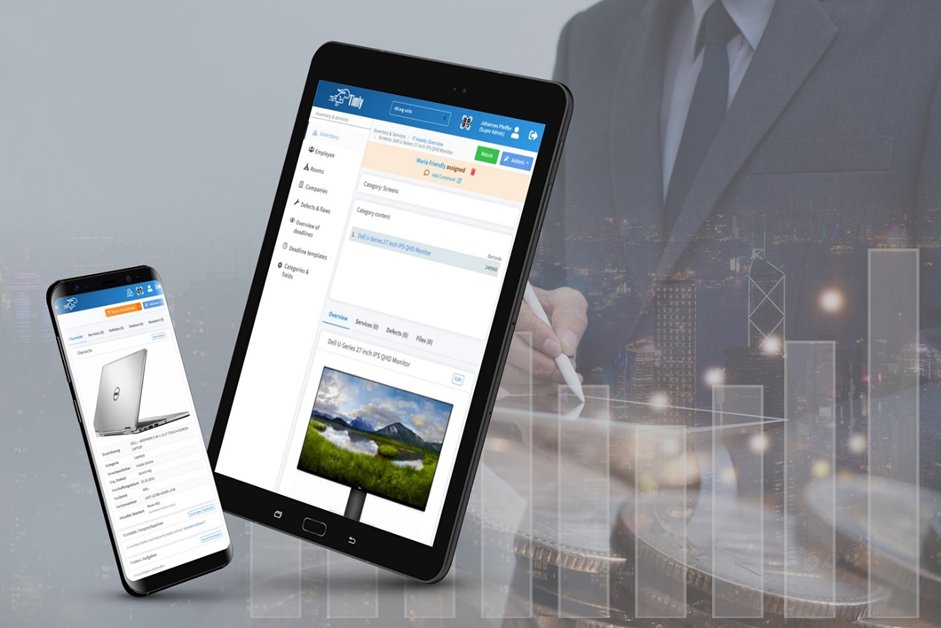
Timly can help you streamline asset lifecycle management, including maintenance, inspections, software licenses, integrations, costs, security, and employee certifications. You can even track defects and deficiencies and connect to external service providers for automated IT asset maintenance management.

Before discovering how this asset management software can improve your ITAM process, let’s see what challenges companies face in this field.

IT asset management challenges

Many construction companies, trade and service businesses, public administrators, and manufacturers still rely on spreadsheets when managing IT assets. Besides being outdated and time-consuming, they leave much room for human error.

They make your ITAM process inefficient, negatively impacting your company’s success. For instance, inventory may fail at short notice or pose security risks, causing business interruption and increasing unnecessary costs.

Spreadsheets make asset lifecycle management cumbersome, increasing administrative efforts and reducing clarity.

Do you have an insight into all the IT equipment your company has? Do you know where it is, in what condition, and who uses it? Which of your devices sit idly, increasing unnecessary maintenance costs and software license renewals?

What is your inventory currently worth? What inspection dates are coming up?

What about safety, functionality, and compliance? Who has permission to use specific assets? Is your sensitive data at risk?

Finding answers to these questions is tricky if you rely on outdated asset tracking and management methods and tools.

ITAM software like Timly can streamline your digital tool tracking and asset management process. You can overcome all the challenges and manage your asset lifecycle with maximum visibility, control, efficiency, and productivity.

Benefits of IT asset Management Software
Benefits of IT asset management software

ITAM software helps track and optimize assets across ITIL (IT Infrastructure Library) lifecycle stages, including IT service management (ITSM), service desk, and problem management.

Here are its most significant benefits.

A holistic view of IT assets

IT asset management software lets you optimize your assets’ lifecycle management, from planning, acquisition, and deployment to maintenance and retirement. It gives you a 360° view of all your hardware and software, including tools, devices, machines, apps, equipment, and vehicles.

It gathers all asset data in one centralized place, helping you manage inventory maintenance, repair, inspections, software license renewals, and other documentation. It streamlines your ITSM process and ITAM efforts for maximum control and efficiency.

Cost-effective asset management

Asset management solutions help you understand who uses your IT assets and how. It also gives insight into the technologies your employees don’t use, enabling you to eliminate unnecessary purchases and license renewals.

That optimizes asset lifecycle management and cuts maintenance and support costs. Managing IT assets from a centralized repository also saves energy, helping you protect the environment.

Higher security

IT asset management software is ideal for enhancing security. Since you know what assets your employees use, you can set and manage user permissions.

You can restrict user access to protect sensitive business data and reduce risks.

Knowing which apps your employees don’t use enables you to remove unnecessary assets from your tech stack, further increasing security.

Better agility

Tracking asset usage is essential for making better business decisions. How does your company use your assets? Does using specific tools still make sense? What IT purchases will give you a competitive edge?

An asset management tool can help assess past purchases and deployments and understand how your company uses hardware and software. That can improve your strategic and operational decisions.

Maximum compliance

Using third-party software requires complying with license terms and conditions and meeting other legal requirements. Compliance is crucial to avoid hefty fines.

Many asset management solutions like Timly have integrated maintenance management software that reminds you of audits, contract deadlines, and software license renewal dates.

It also sends timely reminders for upcoming inspection dates for machines and other hardware equipment, automating your ITSM process.

Timly – the best asset management software for faster workflows

Free asset management and maintenance planning solutions make these processes inefficient and leave much to be desired regarding functionality. They cause companies to lose money instead of supporting efficiency and growth.

The best way to streamline and accelerate workflows is to rely on a specialized paid solution like the Timly software.

Timly is IT asset management software for construction, trade, manufacturing, and service companies. It makes tracking hardware and software a breeze, providing insightful real-time asset data.

It’s a centralized hub from which your ITIL processes pull information, enabling seamless asset, incident, and problem management. It lets you track defects, deficiencies, performance, and usage to understand how to optimize and extend every asset’s life, reducing equipment failures and financial losses.

You can check the condition of your devices, machines, tools, vehicles, or equipment for seamless maintenance planning. You can store inspection records, invoices, instructions, deadlines, and maintenance and repair documentation.

This intuitive asset management tool lets you assign assets to employees and external service providers, record and track their real-time GPS location, and manage them across mobile devices.

It’s an all-in-one asset tracking and management solution for minimum risks and costs and maximum efficiency, productivity, and security.

Are you interested in enterprise asset management software?

Timly is the best asset management tool for streamlining workflows and enjoying maximum transparency and control. The features and benefits above speak for themselves, but you don’t have to trust us blindly. Read Timly reviews to see what other users say about it and make an informed decision.

Do you want to see it in action before committing? Start a free, non-binding trial to determine if it suits your needs and understand why this proven software for efficient IT asset management is all the rage.