














Home Blog Page 95

Featured Categories

What are E book Marketing Strategies? – Definition, 4 Examples of E book Marketing Strategies

0

E book Marketing Definition

E book Marketing is one of the best ways it establishes authority and expertise in any niche. It chances are already published several blog posts or articles you can repurpose and include in your e book.

Or are several years of research and work experience to help you create something precious. Either way, these are a great source of passive income for the business.

But to sell your knowledge and make your e book a hit, you’ll need the right marketing strategies in your arsenal.

What are the Examples of e book marketing strategies to try in 2021?

1. Start with the Quality E book

  • E books it creates equal if we want to succeed with yours, you’ll need to make sure it has excellent value for your readers.
  • Not only it helps to build strong relationships with your audience, but it also will make the e book marketing process so much simpler.
  • It starts by planning out the type of e book you want to write. Including the topic and the specific lessons and insights you wish to impart to readers.
  • Think of a way to present ideas uniquely, tap into your experiences and expertise, and make sure people have great takeaways after reading your book.

2. Set up the conversion funnel

  • After we wrote the final draft, we want to find a solution that lets you host, deliver, and sell your e book.
  • In theory, this is something to achieve by connecting several different platforms, like WordPress, Woo Commerce, and email marketing software provider.
  • On top of that, it also probably need to set up Facebook or Google Ads to start driving people to your sales page. As imagine, setting these up is quite complicated and time-consuming.
  • All it needs to do is pick a funnel template, upload your file. Decide whether we want to use paid ads, customize the sales pages, and set up the email sequence.
  • The platform guides step by step through the entire process, and you don’t need to use any additional solutions to start marketing and selling your e books.
  • It builds multiple types of funnels where you’re either collecting and nurturing your leads or directly driving them onto your sales page.

3. Craft a compelling sales page

  • One way to sell people on the e book’s value is by telling them about it on a dedicated sales page.
  • On this sales page, we sure it includes the main highlights from your e book. What are the biggest takeaways your readers will pick up?
  • And what makes the e book different from others? How people benefit from your story and lessons in a significant way? After all, people from the opinion about site and product in a fraction of a second.
  • If the e book sales page doesn’t look clean and professional, visitors will likely turn away and never return.

4. Tell everyone through social media

  • Social media a fantastic tool to make sure people know when your e book is live. And here are some ways to do it:
  • It schedules a series of posts informing followers about the upcoming launch of your e book.
  • And schedule individual posts and Twitter storms that discuss a particular topic covered in your book.
  • And also, host a Twitter chat and discuss a specific segment of your book.
  • Ask followers for recommendations and ideas on how they’d solve a challenge you cover in your e book.
  • Use ads to grab the attention of people who might not have about you.
  • Update your cover and background photos on your social media profiles.
  • Create slideshows for business or personal use with this intuitive online slideshow maker
What is the Implementation Schedule?- Definition, Three Phases of Implementation Schedule, and More

0

Implementation Schedule Definition

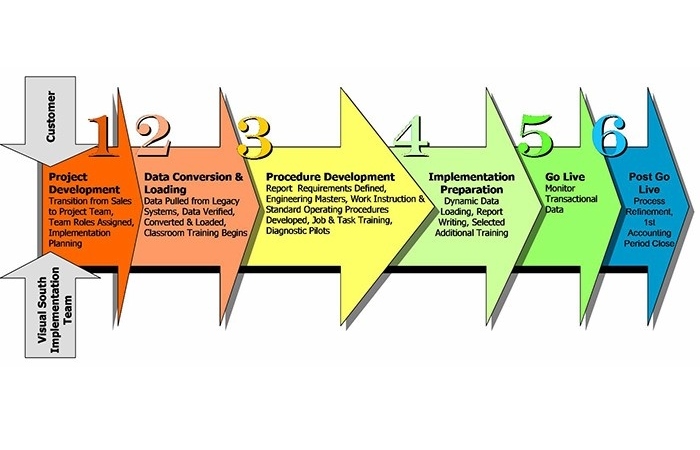
An implementation schedule a framework of Activities to implement over three to five years it’s period.

Also, the overall calendar that schedules implementation of the Activities developers. And, the Implementation Schedule calendar will help to monitor the state of implementation of the Roadmap. And also, you can choose social media editorial calendar template to monitor the same.

What are the Three Phases of the Implementation Schedule?

For this Implementation Schedule, Activities are divided into three phases:

1. Start-up Phase

1. Start-up Phase

It depends on each country, and this phase does not require more than one year. During this phase, the Governance Structure needs to establish.

For instance, the lead agencies that will implement each Activity appoints and workgroups to manage the different project forms.

It is essential to include Activities that focus on stakeholder engagement, communication, and collaboration into this phase.

It also ensures that all trade facilitation stakeholders understand the Roadmap Activities’ common objectives and scope. Moreover, in some cases, are quick-win Activities are already implemented in the start-up phase.

The start-up phases also include any Activities that aim to develop detailed project plans to implement long-term projects in the delivery phase.

2. Delivery phase

The Delivery Phase is the most extended phase of the implementation of the Roadmap. It includes the transfer of all activities that need realize over one to four years.

The transfer stage-wise monitored. Performances ensure that the country is on the right track to achieve the identified purposes.

3. Review phase

It phases at 1) Evaluating whether the Roadmap goals achieve it referring to the Goal Performance Indicators, and 2) Drafting the new Roadmap for the three to five years to come. Ideally, the Review Phase starts between six and 12 months before closing the Roadmap.

Also Read: How to Bet on FIFA World Cup by a BetZillion Expert Tim Harrison

What is Smart Content? – Definition, Works, Advantages, and More

0

Smart Content Definition

Smart content another name for dynamic range. That term sounds more familiar to us, and we are probably aware that there are “static” websites and dynamic websites.

And static websites hard-coded and display the same information to all viewers at all times.

And dynamic websites also pull the content from the database and construct webpages on the fly, meaning that data display changes to suit the viewer.

Also, for the vast majority of websites, the days are dynamic. And not many static websites around.

And they both extra powerful and flexible, as the data is stored in the database and completely separate from the visual design.

It brief updates the site’s look. The content prepares not all mix in the display codes.

And dynamic content intelligent content works are much the same principles. Innovative content changes and adapts dynamically, depending on who is reading it.

It’s way, content targeted to the reader, creating a more individual experience and potentially boosting conversions.

How Does Smart Content Works?

How Does Smart Content Works?

  • Innovative content references the CRM or marketing automation platforms and other software to determine the individual using it includes:
  • Their name
  • Age
  • Where they live
  • Language
  • Email address
  • Interactions with your social media accounts
  • Items they accept from you before
  • And previous offers they use
  • Other websites they visited
  • And previous activity on your site
  • Any other useful information
  • It also customizes content in various ways. We also got the primary form of intelligent content in action as emails customized with our name. But creative content a lot more sophisticated than it.
  • For example, we can divide our site users into different targeted groups and optimize your content for each group.
  • Then it’s not only more personalized but also more likely to convert. There is no limit to the customizations it makes with intelligent content.
  • And we do something as subtle as slightly changing our CTAs and headings to appeal to different user groups.
  • And we change the visual appearance of our content with other images and colors. Also, it displays utterly different content to new users than returning users.

What Are The Advantages Of Using Smart Content?

What Are The Advantages Of Using Smart Content?

1. Enhanced Personalization

  • All marketers personalize content perform better than generics content.
  • Also, personalize email messages are 26% more likely to open emails with non-personalized subjects.
  • Around 78% of consumers are unlikely to engage with brand promotions (according to the Market survey) if they not tailor to previous interactions.
  • Innovative content gives the power to create highly personalized and relevant content for the person reading.
  • It’s resulting in a better experience for the user and a higher chance of conversion for you.

2. Better Targeting

  • The data collected through our CRM database software and marketing software, combined with intelligent content software’s automation and intelligence.
  • And it enables you to create content that highly targets particular user groups.

3. Automatic Optimization

  • Innovative content starts to demonstrate its power.
  • And when it utilizes AI-powered automation to optimize for conversions in real-time.
  • Its sophisticated machine learning algorithms mean that our content can automatically optimize itself with each user visit, learning from each previous visitor’s actions.

Also Read: How to Redeem Codes on Free Fire – resgatar códigos do ff

What are the Sound Signatures? – 4 Types of Sound Signatures

0

Sound signatures we take a look at the designs, features, and various other aspects of buying the pair of headphones.

And taking navigate through most, we took the final step in choosing our favorite pair – the headphone’s sound signature.

Also, like the person’s signature, every headphone takes its unique sound – the sound signature, if we will.

And now, some headphones tend to amplify and focus on specific frequencies for the unique listening experience.

Also, when choosing the headphone, this feature is essential because the sound signature needs to match the kind of music we attend.

And make sure that we experience enjoy listen to the experience. And mess it match up, and it’s something similar using chopsticks to eat the sandwich! They just don’t fit.

What are the Types of Sound Signatures?

  • Headphones’ sound signatures broadly categorizes into four basic types -Flat, Balanced, Bright, V-Shaped.

1. Flat

  • The word ‘flat’ might sound boring, but it’s anything but the signature takes many takers in the audiophile community. And all its frequencies are kept equal, and the audio sounds as natural as much possible.
  • Also, it’s the unique reason why professionals who create and produce music prefer to hear all the elements that go into fusion as they recorded.
  • And later, these headphones are also known as the reference and monitors. It’s popular with professionals and folks that prefer its signature. Genres like jazz, blues, classical, folk, and even rock rule the roost.

2. Balanced

  • It essential flat signature with minor tweaks to make it sound more fun. And most headphone manufacturers try to achieve this by balancing all the frequencies, from lows to highs.
  • And nothing is left out and stands out prominently. One gets to hear the entire range of elements in the song – from vocals, guitars to bass drums. The output thus sounds balanced and lively.

3. Bright

  • Its sound signature is the tricky one. It takes the boosted treble and midrange. Interestingly, it’s popular among some audiophiles as it exposes imperfections in a sound recording.
  • However, if we listen to poorly recorded audio, we are definitely in for the jarring, unpleasant session.
  • Also, even in the well-tuned pair of headphones, extended listening sessions tend to lead to listener fatigue.
  • And the reason – humans are naturally tolerant of lower frequencies and sensitive to higher ones. Also, the headphone that’s too bright can end up seeming harsh.

4. V-Shaped

  • With the output that takes emphasized bass and treble frequencies, rock songs get that life, ‘in-your-face feel with screeching guitar solos, soaring vocals, and grooving drums.
  • The V curve denotes enhanced bass and treble frequencies with the reduced mid-range.
  • Its sound signature takes the universal appeal. And makes the audio sound crisp and loud and is quite popular with most listeners.

How to Develop the Digital Marketing Plan? – Plan, Points

0

Digital marketing plan currently, all businesses and companies need marketing to sell their products and services.

That is why they need to develop this. And it is consistent with the digital objectives, which must mark consistently.

What is the Digital Marketing Plan?

  • The digital marketing plan is the document that reflects different digital promotion strategies for the company and the business.
  • It can summarize web positioning and SEO strategies, pay-per-click ad campaigns, advertising banners (AdWords), email marketing campaigns, etc.
  • Also, in this we must implement a calendar of actions and a list of objectives to be met within a certain period.
  • In this way, when carrying out our plan, the perfect roadmap is set so that each marketing team member is clear about what to do at all times.

What Points should we Consider if we are going to Develop a Digital Marketing Plan?

What Points should we Consider if we are going to Develop a Digital Marketing Plan?

1. Analyze our Sector

  • If we are going to develop the digital marketing plan, we must carefully analyze the sector of our company to obtain market data.
  • We can investigate what type of client is interested in our products and our services, choose one strategy, and develop our digital marketing plan.

2. Digital Marketing Strategies

  • This point is the most important since to develop the complete it, and we need to choose the most appropriate online and it strategies.
  • We can choose to improve our company’s visibility through web positioning and SEO.
  • Which allow us to obtain quality organic traffic.
  • And we can also bet on ads on web pages and in search engines by implementing AdWords campaigns.
  • And where we pay for the clicks or impressions of our ads.
  • We can also carry out mailing campaigns through platforms.
  • Such as Mailchimp and Webber, which allow us to create personalized emails and manage our clients’ lists and databases.

3. Set the Timetable for Action

  • In addition to online marketing strategies, we must set the action calendar to carry out the actions.

This calendar must carry the detailed actions as the roadmap that tells us when and how we must carry out the marketing strategies for our online marketing plan.

Also Read: Useful Items for Surviving Winter Blackouts

What is the Market Segmentation? – Definition, 5 Benefits of the Market segmentation

0

Definition of the Market segmentation

Market segmentation the process of dividing the target market into smaller, different defined categories.

It segments customers and audiences into groups with similar demographics, interests, needs, and locations.

What are the Benefits of Market Segmentation?

  • Market segmentation is important because it makes it easier to focus marketing efforts and resources on reaching the most valuable audiences and achieving business goals.
  • And market segmentation allows us to get to know our customers, identify what it needs in our market segment.
  • And determine how we can best meet those needs with your product or service. It helps us design and execute better marketing strategies from top to bottom.

1. It Creates Stronger Marketing Messages

  • When we know whom we are talking to, we can develop more vital marketing messages.
  • We can avoid generic, vague language that speaks to a broad audience. Instead, we can use direct messaging that speaks to our target audience’s needs, wants, and unique characteristics.

2. Differentiate our Brand from Competitors

  • Actuality, the extra specific about our value propositions and messaging, also allows us to stand out from competitors.
  • Instead of blending in with other brands, we can differentiate our brand by focusing on specific customer needs and characteristics.

3. Identify the most Effective Marketing Tactics

  • With dozens of marketing tactics available, it can difficult to know what will attract our ideal audience.
  • It using different types of market segmentation guides us toward the marketing strategies that work best.
  • When we know the audience we are targeting, we can determine the best solutions and methods for reaching them.

4. Design hyper-targeted ads

  • We can target audiences by age, location, purchasing habits, interests, and more on digital ad services.
  • When we use market segmentation to define our audience,.
  • And also we know these detailed characteristics and can use them to create more effective, targeted digital ad campaigns.

5. It Attracts and converts Quality Leads

  • When our marketing messages are clear, direct, and targeted, they attract the right people. We draw in ideal prospects and are extra likely to convert potential customers into buyers.

What is PHP? – Uses, 9 Features

0

PHP is the open-source, interpreted, and object-oriented scripting language that executes on the server side.

And also fine-suited for web development. Therefore, it develops web applications (an application that executes on the server and generates the dynamic page).

Also, it creates Rasmus Leadoff in 1994 but appear in the market in 1995. And also 7.4.0 is the latest version of PHP, which release on 28 November. And some crucial points that need notice about PHP are followed:

PHP stands for Hypertext Preprocessor.

Also,  it interpreted language, i.e., there is no need for compilation.

And PHP is faster than other scripting languages, for example, ASP and JSP.

Also its server-side scripting language, which uses to manage the dynamic content of the website.

And embed into HTML.

And also its the object-oriented language.

Also its open-source scripting language.

And also, it simple and easy to learn the language.

Why Uses PHP?

  • It server-side scripting language, it uses to designs the dynamic web applications with MySQL database.
  • It handles dynamic content, database as fine as session tracking for the website.
  • We can create sessions in it .
  • It can access the cookies variable and also set cookies.
  • Also, it helps to encrypt the data and apply validation.
  • And also it supports several protocols such as HTTP, POP3, SNMP, LDAP, IMAP, and many extras.
  • It also uses it language, and we can control the user to access some pages of your website.
  • Its easy to install and set up, and also the best language to learn.
  • And also can handle the forms, such as collecting the data from users using forms, saving it into the database, and returning helpful information to the user. For example – Registration form.

What are the Features of PHP?

What are the Features of PHP?

1. Performance

  • The PHP script executes much faster than those written in other languages such as JSP and ASP.
  • And also uses its memory, so the server workload and loading time automatically reduce, resulting in quick process speed and better performance.

2. Open Source

  • The PHP source code and software are freely available on the web. We can develop all the versions of  its according to our requirements without pay any cost. All its components free to download and use.

3. Familiarity with the Syntax

  • It takes easily understandable Syntax. And programmers are comfortable coding with it.

4. Embedded

  • The PHP code can easily embed within HTML tags and script.

5. Platform Independent

  • Its exist for WINDOWS, MAC, LINUX & UNIX operating system.

6. Database Supports

  • It supports all critical databases such MySQL, SQLite, ODBC, etc.

7. Blunder Reportage

  • It takes predefine error reporting constants to generate an error notice or warning at runtime. Example E_ERROR, E_WARNING, E_STRICT, E_PARSE.

8. Loosely Typed Language

  • It allows us to use the variable without declaring its datatype. It takes automatically at the time of execution based on the types of data it contains on its value.

9. Web servers Support

  • It compatible with almost all local servers used today like Apache, Netscape, Microsoft IIS, etc.

Also Read: Successful RPA Deployment with Process Mining

What is the definition of SEO?

0

SEO

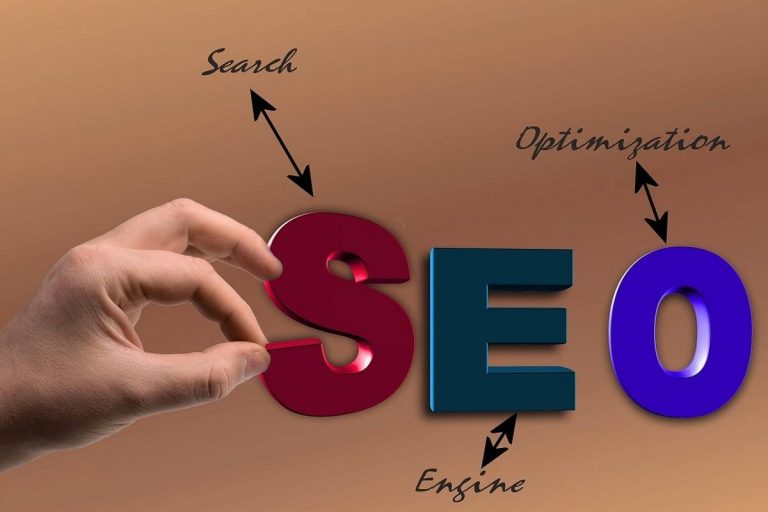
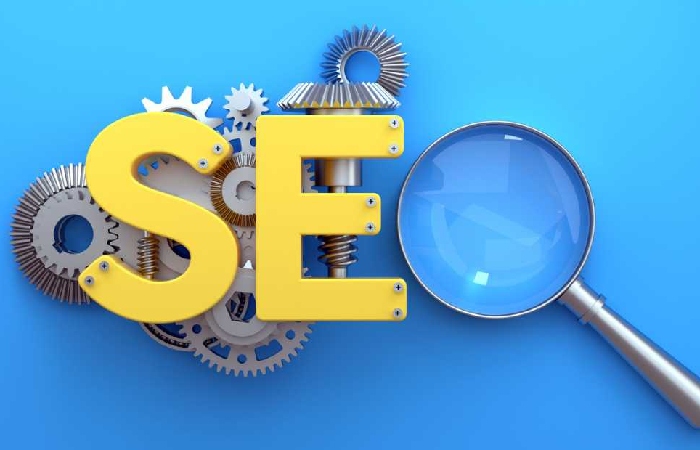
  • SEO is the contraction that comes from the English expression search Engine Optimization.
  • It is the technique that consists of optimizing a website to achieve the best possible positioning in Internet search.

Engines

  • In other words, the site that respects the SEO criteria appears among the first results that a search engine returns to specific searches.
  • They translate in the site’s high number of visitors in question versus those who appear further behind in searches.
  • Suppose a user enters Google and searches the hotel. The first site looks on the first page of the results related to the Restaurant.
  • The location of these restaurants, therefore, has remain design according to SEO parameters.
  • On the other hand, sites that only appear on the eighth and ninth page of results, to name one possibility, do not respect SEO techniques.
  • In addition to all the above, it’s interesting that it is clear that there are two different types of SEO:

SEO Off -Site

SEO Off -Site

  • As its name already indicates, it is about that work that the person in charge of the SEO above carries out external aspects of its website.
  • Hence, the cost of studying and practical issues such as the number of links used and their quality.
  • The performance achieved in search results, the authority of the brand, the presence that you have in what are social networks.

SEO On-Site

  • On the other side, compared to the previous one, the work named in this way is the one that does concern itself with the page itself.
  • For this reason, the person in charge of this work proceeds it improve and optimize its aspects, such as loading time, the format of the URLs, or the content itself.
  • It’s essential to identify the engine from the google study and examined different analyzed to know the sites on the Net and order them in the results of their searches.
  • And website administrators’ objective is for the sites to appear in the first places of said ranking made by the search engine.
  • Therefore, the SEO process consists of studying the ordering variables and respecting them in the sites’ programming and design (for example, including keywords in the content, adding links, etc.
  • As we take declared previously, there are many and varied factors taken into account by any search engine to proceed with results; however, among the most important.

There are two fundamentally

  • Connection or relevance of the established search the page in question. In this sense, among other things. It will assess the number of times that the term you are looking for appears within it.
  • The website’s popularity is that it believed that the better known it is, the more quality content it will offer.
  • As the processes used by search engines by studying sites keep changing, SEO standards also update over time and requirement site renewal.

Also Read: Why is thin Film Technology so Important in Today’s World?