Home Blog Page 90

Featured Categories

What is the Content Engineering? – Important, Need

0

Content engineering is a discipline to design, acquire, manage, deliver. And the use of content and the technologies deployed to support the complete content lifecycle.

Why its Important?

  • It ensures that improvement investments achieve the most significant benefits by introducing rigorous discipline to designing content and associated technical and business processes.

Also Read: What is Hidden Content Gems in Business? – 8 Examples of Hidden Content Gems in Business

Why does the Content Strategist Need to Know this?

  • Engineering applies scientific principles to the design, development, support, and use of systems that are themselves made up of structures and processes.
  • The challenge of engineering is to design systems that balance and integrate various considerations, including usability, sustainability, affordability, manufacturability, efficiency, and effectiveness.
  • It overcame this challenge; engineering approaches these objectives with systematic use of precedents, standards, frameworks, measurement, testing, and state-of-the-art technologies.

Also Read: What is the Content Inventory? – Definition, Organize, Inventory, and More

  • It becomes increasingly apparent that, in the 21st century, the business of content cannot continue operating as the cottage industry.
  • However well-intentioned, the professionals working in isolation and leveraging the preferred desktop tools.
  • And also its personalized techniques cannot keep up with the demands of a rapidly evolving and increasingly digital global economy.

Also Read: What is Digital Governance Critical for Digital Transformation? – Definition, Elements, and more

  • And content engineering seeks to bring content into the modern era by ensuring that content structures and tools.
  • Its process design makes the most current best practices, proven content technologies, applicable design patterns, and existing implementation experience.
  • Also, simply put, the discipline of content engineering represents the context within which content strategists, and indeed everyone involved in the content lifecycle, will operate from now on.

Also Read: What is Corporate Strategy? – Definition, 6 Components

Also Read: What is the Benefactor? – Definition, Work, and More

What is Corporate Strategy? – Definition, 6 Components

0

Corporate Strategy Definition

The corporate strategy takes the portfolio approach to strategic decision-making by looking across all of the firm’s businesses to determine how to create the most value.

To develop the corporate strategy, firms must look at how the various business they own fit together.

And how they impact each other and how the parent company is structure to optimize human capital, processes, and governance.

Its corporate strategy builds on top of business strategy, concerned with the individual business’s strategic decision-making.

What are the Components of Corporate Strategy?

  • There are several essential components of corporate strategy that leaders of organizations focus on it. The main tasks of corporate strategy are:
  • Allocation of resources
  • Organizational design

1. Allocation of Resources

  • Firstly, the allocation of resources at the firm focuses primarily on two resources: people and capital.
  • Secondly to maximize the entire firm’s value, leaders must determine how to allocate these resources to the various businesses.
  • Lastly, and business units to make the whole more significant than the sum of the parts. The critical factors related to the allocation of resources are:

2. People

  • Identifying core competencies and ensuring they distribute across the firm.
  • Also, moving leaders to the places they are needed most and add the most value changes over time, bases on priorities. It ensuring the appropriate supply of talent is available to all businesses.

3. Capital

  • Firstly, it allocating capital across businesses so earns the highest risk-adjusted return.
  • Secondly, we analyze external opportunities (mergers and acquisitions).
  • Lastly, and allocate capital between internal (projects) and external opportunities.

4. Organizational Design

  • Organizational design involves ensuring the firm the necessary corporate structure and related systems to create the maximum value.
  • Also, leaders must consider the role of the corporate head office centralized vs. decentralized approach.
  • Also, the reporting structure of individuals and business units – vertical hierarchy, matrix reporting, etc. And, critical factors related to organizational design are:

5. Head Office (centralized vs. decentralized)

  • Firstly, it determines how much autonomy to give business units
  • Secondly, also, deciding whether decisions are made top-down or bottom-up
  • Lastly, its influence on the strategy of business units

6. Organizational structure (reporting)

  • Determine how large initiatives and commitments divided into smaller projects
  • Integrating business units and business functions such that there are no redundancies
  • It’s allowing for the balance between risk and return to exist by separating responsibilities
  • Also, developing centers of excellence
  • And determining the appropriate delegation of authority
  • Also, setting governance structures
  • And setting reporting structures (military / top-down, matrix reporting)

Also Read: What is the Benefactor? – Definition, Work, and More

Also Read:
What is the Definition of Conversion? – Conversion, Matter

What is the Definition of Conversion? – Conversion, Matter

0

The word “conversion” define as “the process of changing and causing something to change from one form to another.”

Many people are probably familiar with this term related to religious conversion or two-point conversions in football.

And not the marketing definition of conversion, but it’s helpful to see how one translates to the other.

And conversion in marketing is when the visitor to our website completes the wants goal. In this way, It converts from visitors to leads and purchases something for customers.

A conversion occurs when someone changes from the passive visitor to the active, interested visitor and customer.

What is the Conversion?

  • What exactly are conversions? It depends on our business, and there are various possible conversions. And the main modifications that marketers often refer it include:
  • Sales
  • Also leads
  • And Email signups
  • And form completions
  • Also registration
  • And subscription
  • Also, visits to the critical page
  • And also phone calls (and another direct contact)
  • Not all of these conversions apply to all businesses, and there may require other modifications our company can track.
  • Anything that indicates customer interest and takes them a step closer in the buying cycle may require the conversion.

Why We Do Conversions Matter?

  • Conversions matter because they make our business profitable. The ultimate transformation is the sale.
  • But other conversions are valuable if they help us find leads and nurture them into paying customers. Even if we did not know it and still did not wholly understand modifications, they were valuable.
  • The real question must why tracking conversions matters. And tracking sales conversions is essential to know whether and not our business is profitable.
  • But lesser conversions are helpful to track as well. By tracking conversions, we can understand what interests our customers, what marketing tactics work, and where our marketing may fall short if users fail to convert.
  • Also, tracking this information can help you adjust your website, marketing, and sales tactics to improve profitability.

Also Read: What is Ghost Blogging? – Definition 3 uses ghost bloggers

Also Read: What is Content Syndication? – Definition, Impact, Best Practices

What is Ghost Blogging? – Definition 3 uses ghost bloggers

0

Ghost Blogging Definition

Ghost blogging online presence important part of any business’s marketing strategy.

And it’s drawing people in with inviting content. It’s a great way to build a customer base. And the well-written blog is sure to draw attention.

In turn, it ranks our website better in the search engine results, educates readers, and attracts potential new fans.

Also, blogs these days are a great way to interact with the world. Brands use them to discuss opinions, give feedback, and market products.

And the modern consumer now uses to building the relationship with the brand through social media.

And the active blog is a straightforward way to open a dialogue with visitors, whose feedback can guide your next steps.

Who uses ghost bloggers?

  • Anyone can use the ghost blogger. We are probably surprised at the number of blogs that ghost bloggers write.
  • And people request the services of the ghost blogger for all sorts of reasons.

1. People Pressed for Time

  • We live in a busy world, where we are juggling our obligations every minute of the day.
  • And also it generates a quality blog that takes time.
  • Which you may prefer to hand over to someone else.

2. People who did not Take the Writing Ability

  • Even the most successful business owner feels less than confident about the writing ability.
  • Hiring the ghost blogger, who will have impeccable written English, avoids readers’ risk of seeing poor quality text on our website.

3. People who Need to Demonstrate Credibility

  • Sometimes we need to show credibility to maintain our audience where a service like Copify can be helpful.
  • And filling in the quick brief shares the request to the pool of copywriters .
  • And who choose jobs in which they take the required subject knowledge.

Also Read: What is Content Syndication? – Definition, Impact, Best Practices

What is Hardware? – Definition, basics, classification, Examples, and more

0

Hardware Definition

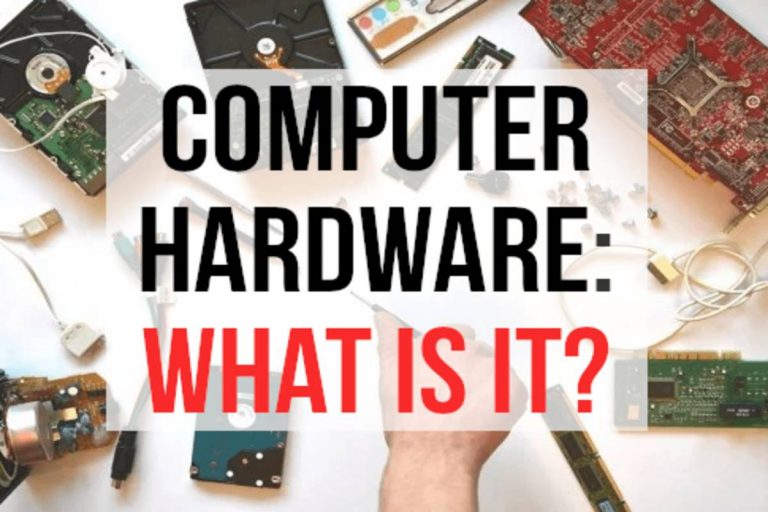
The word hardware in computing refers to the physical, tangible parts of a computer system, electrical, electronic, electromechanical, and mechanical components.

Cables, cabinets or boxes, peripherals of all kinds, and any other physical element involved, make up the Hardware or material support. On the contrary, the logical and intangible asset is the so-called software.

The term is typical of the English language, and its translation into other languages does not have a consistent meaning. This reason is also accepted as it sounds.

It defines as “A set of components that make up the material part of a computer. “The term, although the most common, is not only applied to computers.

It also uses in other areas of daily life and technology. For example, Hardware also refers to tools and machines, and in electronics, Hardware refers to all electronic, electrical, electromechanical, mechanical components, wiring, and printed circuit boards.

What are the basics of the Hardware?

1. Hardware input and input

  • Input devices allow data to collect just the eyes and ears receive information from the world around us. Through the keyboard, we can enter the data and information. And the mouse, we select the icons and menus of the different programs.

2. Memory

  • The memory contains pieces of information in sections, like books in the library. The programs and data are stored there. It is also known as RAM (acronym in English random access memory ).
  • Which means you can access it anywhere at random. The memory circuits and” chips ” are fetched into the fiberglass material.

3. Processor

  • The processor works like the human brain, and also it examines and alters data, loads, and carries out program instructions. Also searches for memory programs to run.
  • Its made up of two parts of the control unit and the logical arithmetic unit. The Control Unit looks for the programs in the memory, and it executes the instructions of the same.
  • And for its part, the logical arithmetic unit searches for the necessary data in memory and performs the programs’ calculations.
  • In the processor are tiny and complex circuits equestrian on the sheet of fiberglass. There are also transistors, which are switches and switches.
  • The courses and transistors work in synchronization, like the musicians in an orchestra led by a conductor.

4. Output and output Hardware

  • The output devices are showing the results that the processor obtained. For example, the monitor and screen displays visual information, speakers transform data into sound, and printers present data on paper

What are the classification of the Hardware?

1. Processing Hardware

  • It corresponds to the Central Processing Unit and CPU, the computer’s logical operations center, where the tasks necessary for the rest of the components’ operation it interpretation and executed.

2. Storage Hardware

  • It referred to all the components whose function is to protect the information so the user can access it at any time.
  • And also in this case, the primary device, RAM Random Access Memory.
  • Its also entirely up to secondary memories, such as hard drives and SSD and USB memories.

3. Graphic Hardware

  • Its also mostly made of graphics cards that take the memory, and the CPU is responsible for interpreting performing the signals dedicate to the construction of images.
  • The function does not fall to the CPU.
  • And also it’s done with efficiency since it release these functions to the main memory, the system works optimally.

4. Peripheral Devices

  • It is all the Hardware that allows information to enter the computer or go outside. That is divide into three categories.
  • Input peripherals: It allows data access to the computer—for example, keyboard, microphone, webcam, etc.
  • And also output peripherals: through them, the user can extract information, such as scanners, printers, consoles, and speakers.
  • Input and output and mix peripherals: they are capable of entering and extracting information.
  • And also touchscreens fall into this category, as the DVD and Blue Ray players and flash drives. Latter are essentially secondary memories but it use as mix peripherals.

What are the Examples of Hardware?

  • Some simple Examples of Hardware
  • Microprocessors, motherboards, integrated cards (audio, video, etc.)
  • Monitor projectors, video beams, etc.
  • And the printer scanner is external peripherals.
  • Also, the keyboard and the pointer mouse with which the user communicates with the machine.
  • And modules of the RAM in the CPU.
  • And batteries keep the system running and wiring that connects to the portions.
  • Hard drives and removable memory ( flash ) drives.

Also Read: What are Highly Successful Leaders? – Definition, 4 Habits of Highly Successful Leaders

Also Read: What are Meta Keywords? – Definition, Uses, Kindness

What are Life Insurance Settlement Options? – Definition, 4 Options

0

Life Insurance Definition

Life insurance policy dies the beneficiary, and beneficiaries eligible for the policy death benefit.

And inside the life insurance policy, there are life insurance settlement options that pertain to the method in which the funds payable to the beneficiary.

Usually, there are many different settlement choices available to the beneficiary (beneficiaries).

And life insurance settlement options many circumstances, beneficiaries select the lump sum payment. It happens when the overall amount of the funds settle at one time in one price.

It proceeding with this choice can often help the beneficiary choose to pay off significant obligations such as funeral and burial expenses and any other final debts of the deceased.

The funds also replace the insured person’s income and help to survive loved ones pay ongoing living expenses.

If the beneficiaries prefer not to collect the whole amount of the death benefit at one time, there are alternative settlement options that select. Several of the most common of these can include:

1. Interest Income Option

  • Use the interest income option. And the life insurance company holds the funds, and it pays the specified amount of interest on the funds.
  • The interest payments on the monthly are quarterly, semi-annual, or annual schedule. When selecting the option, the beneficiary can get a portion or all of the proceeds when needed.
  • It might be suitable for individuals who do not want the life insurance proceeds until the future date. For example, if the money remains to be used for a child’s college education expense several years later.

2. Life Income Option

  • The life income option is comparable to the annuity when deciding on its insurance settlement option.
  • The policy’s beneficiary promises to get the income for the balance of his and her life, irrespective of how long it may be.
  • The exact amount of that income always is dependent on the total of the policy death benefit. In addition to the beneficiary’s age and gender, these determine factors in the income recipient’s life expectancy.

3. Joint and Survivor Life Annuity Option

  • Suppose using the joint and stay life income annuity option. It means that the benefit payments will be dependent on the number of benefit proceeds. And the life expectancy of the named beneficiary who anticipates living longer.
  • Consequently, the benefit proceeds’ payout continues to pass from one beneficiary to the other up until the last beneficiary has died.

4. Specific Income Option

  • The receives choose the specific income option, and they get an equal measure of income each year for the particular number of years up until all of the benefit proceeds have been paid out.
  • And using its settlement option if the beneficiary must die before all of the benefit income has been collected. Another person must choose to accept the benefit payments’ balance until all benefit payments it paid.

How to Create Strong Brand Building Blocks? – Definition, 3Keys, and More

0

Strong Brand Building Blocks Definition

Strong brand building blocks in today’s globalized, digitally-driven world, the need for corporate branding to be consistent and powerful is more important than ever.

And also strong building blocks brand positioning is 64% of consumers saying they trust a brand more if they share values. So it’s vital that the brand position, deals, and mission are exact and communicated coherently.

Consistency is consistent brand implementation across all channels increases revenue by 23%, meaning that every single communication channel matters.

Also in strong building blocks Visual identity, the defining color, increases brand recognition by up to 80%, and while visual identity includes extra than just the color, this statistic shows the potential of its power.

must understand that branding is not only limited to your visual representation of the brand. It is also about the talented individuals you have in your team. People trust a brand that is supported by talented individuals.

Hence, while branding your business, you must also invest in talent acquisition consulting services. This will help you build a foundation of trust among your audiences.

What are the Keys to Building Blocks?

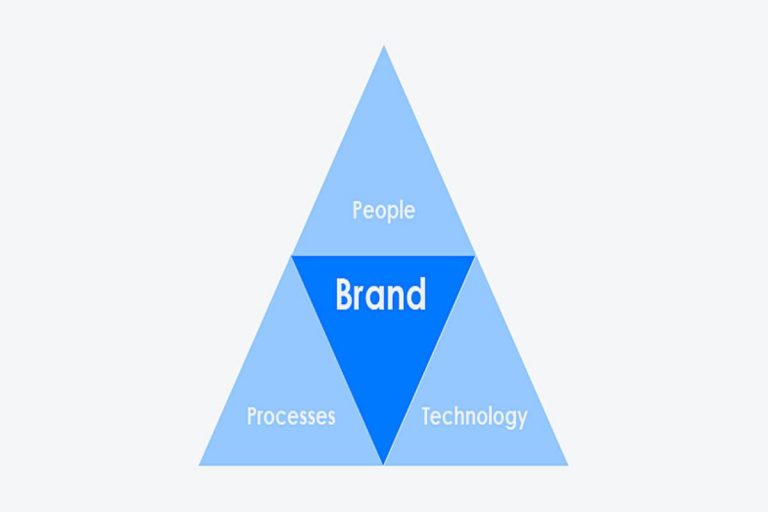
  • These winning elements base on narrow down to just three fundamental building blocks – people, processes, and technology.

1. The Role of People in Strong Brands

  • The companies must commit to building strong brand stories from the inside-out – employee buy-in to the company brand is crucial.
  • The research found 92% of consumers are more likely to trust brand information. If it comes to employees or peers, rather it endorsements and company adverts.
  • Also, the world’s most recognizable brands know that building solid brands starts internally. It takes e-retail giant Zappos and its infamous hiring policy. The HR process mix of the interview and cultural fit screening.
  • It measures candidates against a ten-point brand manifesto to determine if they would also be a strong brand ambassador.
  • No matter which position they apply for, successful interviewees then progress to a month-long customer service training program.
  • And the program exposes them to the brand’s ‘delivering outstanding customer service’ brand value. Like the effects, Zappos is 100% sure they take the team dedicated to growing the brand.
  • Writing employees into our brand story is another effective way of cultivating a sense of brand loyalty and providing the vital brand cornerstone.
  • In general, electric (GE) did precisely this with its brand ambassador program – after realizing negative brand perceptions were affecting talent recruitment.

2. Strong Brands are all about Processes

  • It organizes processes that support and facilitate brand growth, making it easier to build and brand that connects with the target audience. And particularly in global and multinational brands.
  • Slightly than the head office serving as a top-down transmitter of company branding, providing one direction to local divisions and utilizing network models.
  • It gives organizations the critical framework they need to reflect the brand identity and vision while accommodating local cultures, languages, and preferences. When it comes to solid brand examples, Mc donald’s frequents references.
  • The fast-food franchise also serves up the perfect analogy for the network process. it glows golden arches that are instantly recognizable around the world.

3. Supporting Strong Brands with Technology

  • A strong brand is extra than the logo; it’s entirely up of hundreds of interlink elements – from the billboards’ images to the font uses in email sign-offs.
  • Different software and systems need to support brand assets’ access, monitoring, and consistency across all company channels for any company, particularly individuals operating on a global or enterprise level.
  • And technology such as brand asset management (BAM) tools gives employees a solid starting point for producing on-brand content.
  • They allow all employees to access brand elements, ensuring brand compliance and consistency across all channels.

Also Read: How Social Activities Increase Employee Engagement? – Six Examples

Also Read: What is the Microsoft Office? – Definition

What is the Microsoft Office? – Definition

0

Definition of Microsoft Office

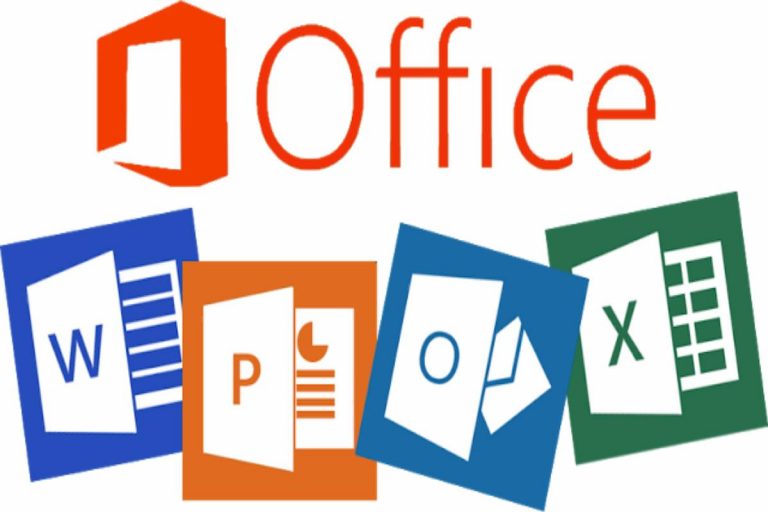
The  Microsoft office software was developed by Microsoft Corp company founded in 1975. It set of applications that perform office tasks, that is, that allows us to automate and improve an office’s usual activities.

The oldest version of Microsoft Office was throwing in 1989 with two basic packages. And Microsoft PowerPoint, Microsoft Excel, Microsoft Word, and another to which the schedule plus and Microsoft access programs were added.

Word

  • These are the most significant popular programs that are a portion of the Microsoft Office. It contains the word processor that includes the spell checker, thesaurus, and the possibility of working with different fonts (fonts).

Excel

  • It’s partly composed of worksheets. Its attraction is the possibility of performing arithmetic operations automatically. And which facilitates the development of balance sheets and financial statements.

PowerPoint

  • The Office program uses to produce and display visual presentations. It’s has based on the development of multimedia slides that can include images, text, sound, and videos.
  • Management of personal data and emails can take managed the Outlook. Its main strength is the email client, although it also offers the calendar and the contact directory.
  • It must take note that Microsoft Office is a licensed program. Therefore, those who wish it take advantage of its benefits must buy it and respect the contract conditions.
  • Such as the prohibition of making copies for profit. Some of its main competitors are Open Office (open source), Star Office, Lotus Symphony, and WordPerfect Office.
  • The popularity of the Office has been declining in recent years. The first victim is probably PowerPoint.
  • Many users began to understand that Flash offered the same possibilities and many more, with the level of customization impossible to achieve in the first.
  • With mobile phones and the applications’ attractiveness, the caring of relocation took place from the PC to these devices. It’s transforming the software marketplace collaborating with the growth of mist and free tools.
  • Microsoft, given that for some time, it has been possible to enjoy some of Office’s features for free and through an email account.

Piracy

  • Like Windows and the various Adobe packages, Photoshop and Illustrator, Office is one of the most common sources of piracy.
  • And one of the main reasons is handy tools for training since they are usually among the requirements of most jobs that include computer tasks of some kind.
  • Today, there are free alternatives to almost all of them, which are more powerful and efficient, but which tend to take a weak point in common.
  • And interfaces that are difficult to navigate and not visually attractive. They lead many users to dismiss them in a matter of seconds, reverting to convenient illegal downloads.
  • However, piracy proliferated around every obstacle are remains presented its way, wonders the large software development company suffers from these situations.
  • It’s common to hear that it’s likely that Microsoft and Adobe, for example, make sure that the programs reach as many homes as possible through regular acquisitions and illegal copies.
  • This theory is base on the fact that the real profit occurs. Thanks to allowing private users to know and enjoy its tools, the popularity grows to the point of turning them into benchmarks.

Also Read: What is the Considered of Good Price-To-Book Ratio? – Definition, Basics

Also Read: What is Capitalization Rate? – Definition, Understanding, Formula